BIX: Where brands meet creators
Role
UX/UI Designer
timeline
2+ years
team
3 founders
3 frontend developers
2 backend developers
contribution
User research & Data analysis
design system
ux/ui design
overview
How do we make it easier for creators and brands to meet each other and collaborate
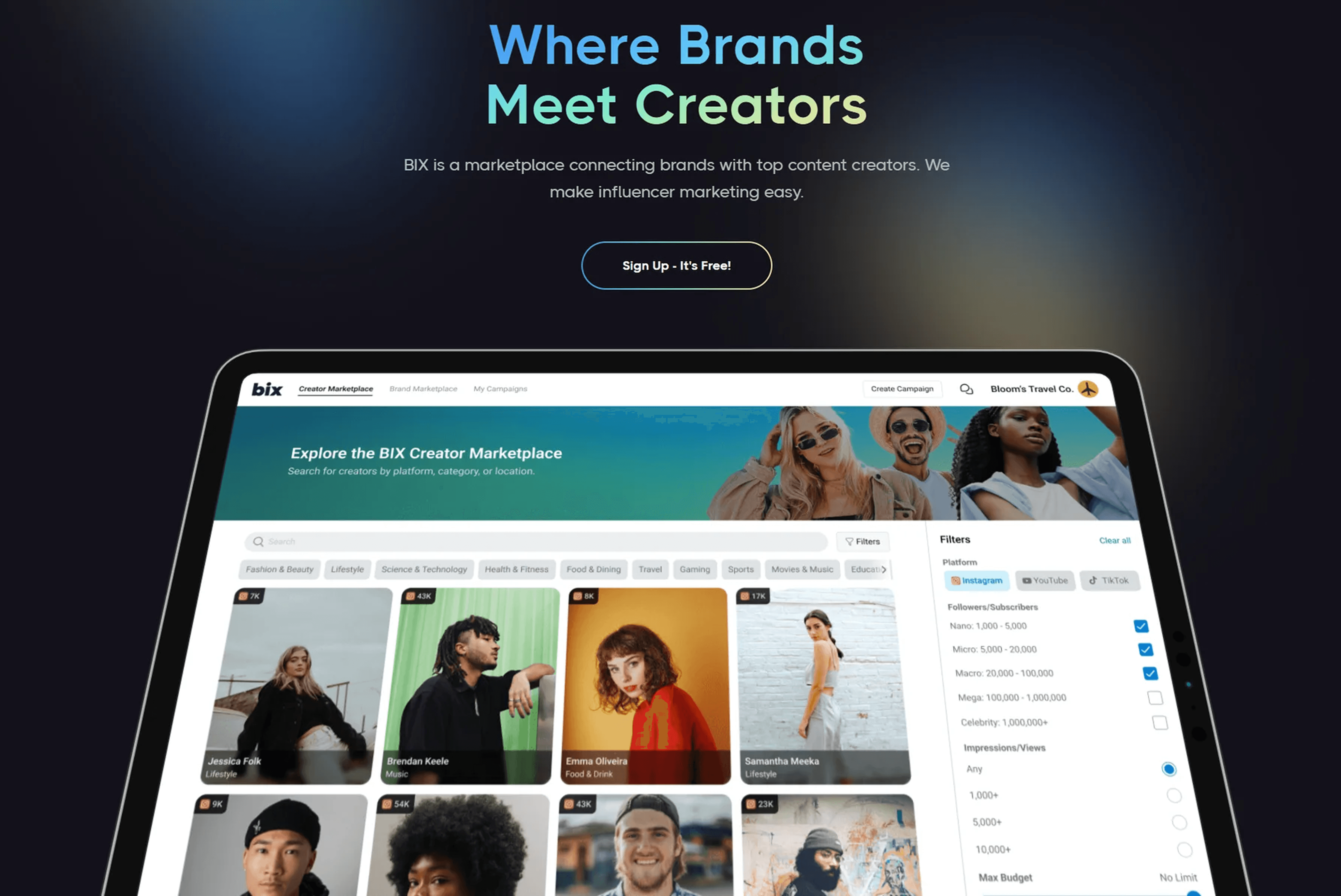
bix is an innovative platform designed to seamlessly connect brands with creators/influencers. bix's mission is to foster authentic partnerships that drive engagement and growth, and to give up-and-coming creators a chance to share their influence with the world.
bix is an innovative platform designed to seamlessly connect brands with creators/influencers. bix's mission is to foster authentic partnerships that drive engagement and growth, and to give up-and-coming creators a chance to share their influence with the world.
first contact
I was initially approached for a one-off collaboration on a project in the early stages.
At the time, bix was called bixihub, and it consisted of only a few very rough drafts and a lot of ambition. My job was to flesh out these initial drafts into proper designs
At the time, bix was called bixihub, and it consisted of only a few very rough drafts and a lot of ambition. My job was to flesh out these initial drafts into proper designs
Initial refresh
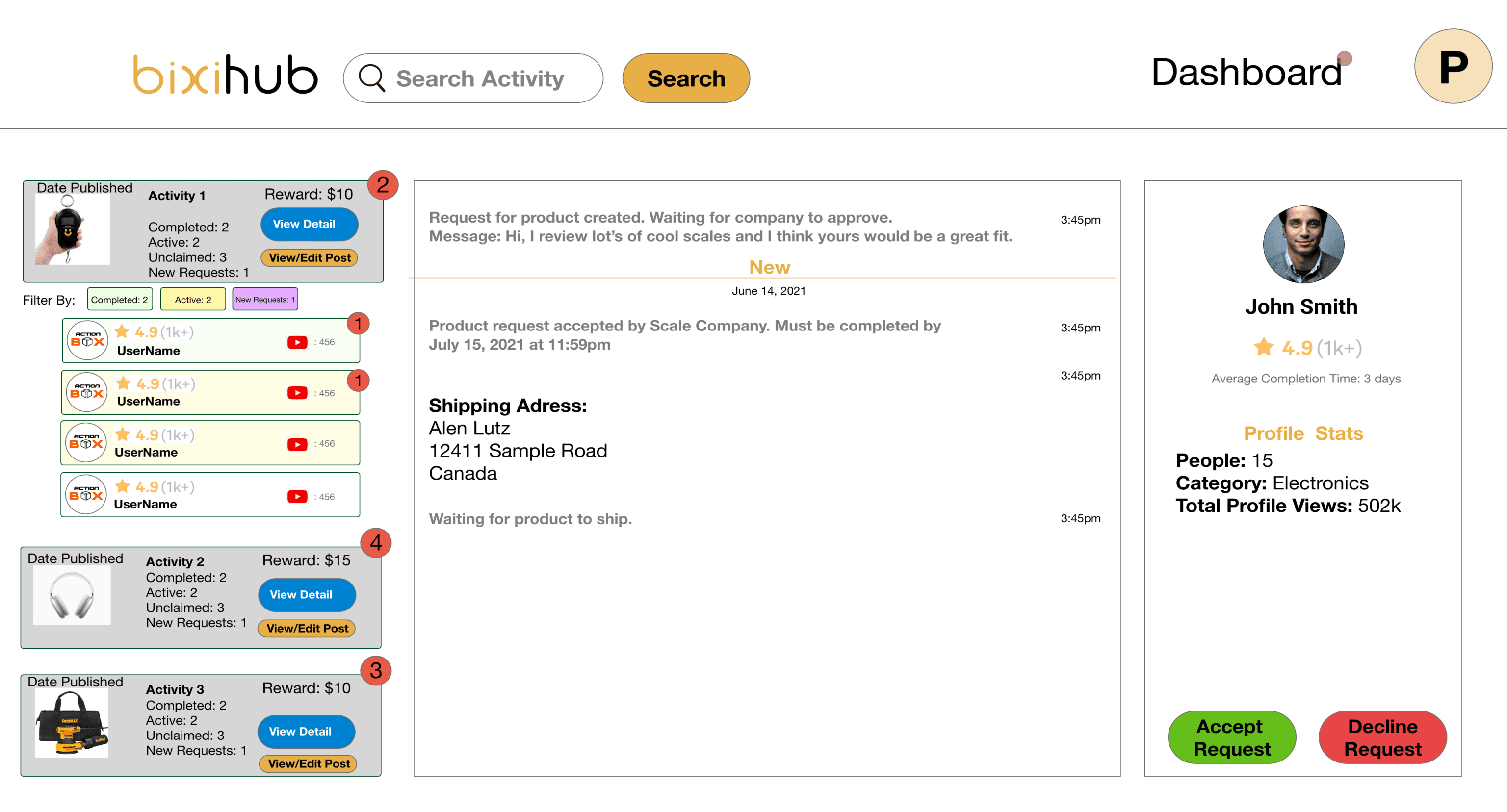
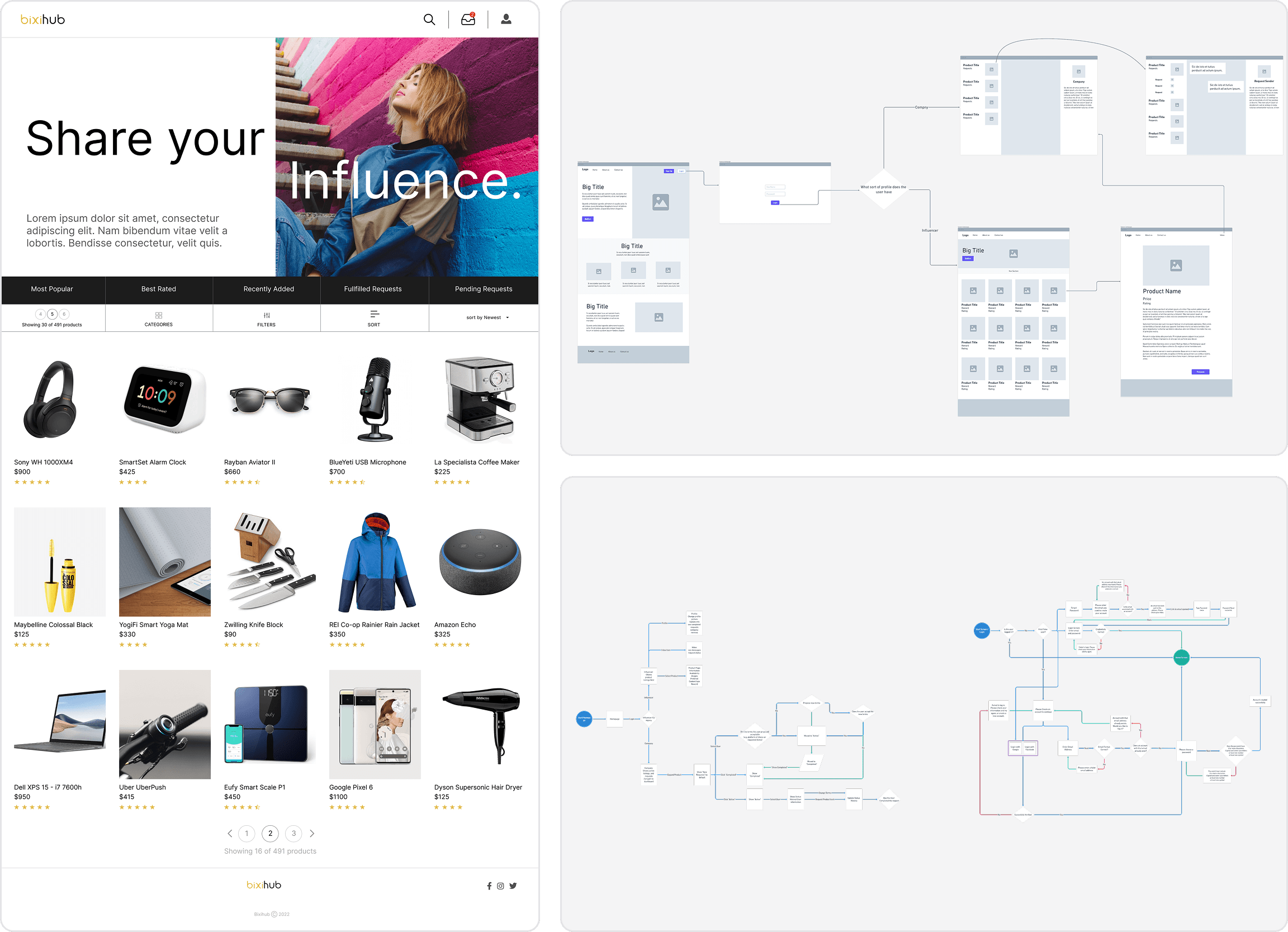
The initial concept for bix was a substantially smaller application that it would eventually become. I delivered an initial concept, along with flows, and core components of a design system. From there our collaboration continued sporadically, with the bix team reaching out to flesh out individual features, as one of the founders (with a technical background) was developing previous pages.
The initial concept for bix was a substantially smaller application that it would eventually become. I delivered an initial concept, along with flows, and core components of a design system. From there our collaboration continued sporadically, with the bix team reaching out to flesh out individual features, as one of the founders (with a technical background) was developing previous pages.
A lesson learned
A “cursed problem” shifts direction and stalls progress
At this point in the project, working on bix had become a project on which I work on every week, how. Three developers had also joined the team in similar capacities.
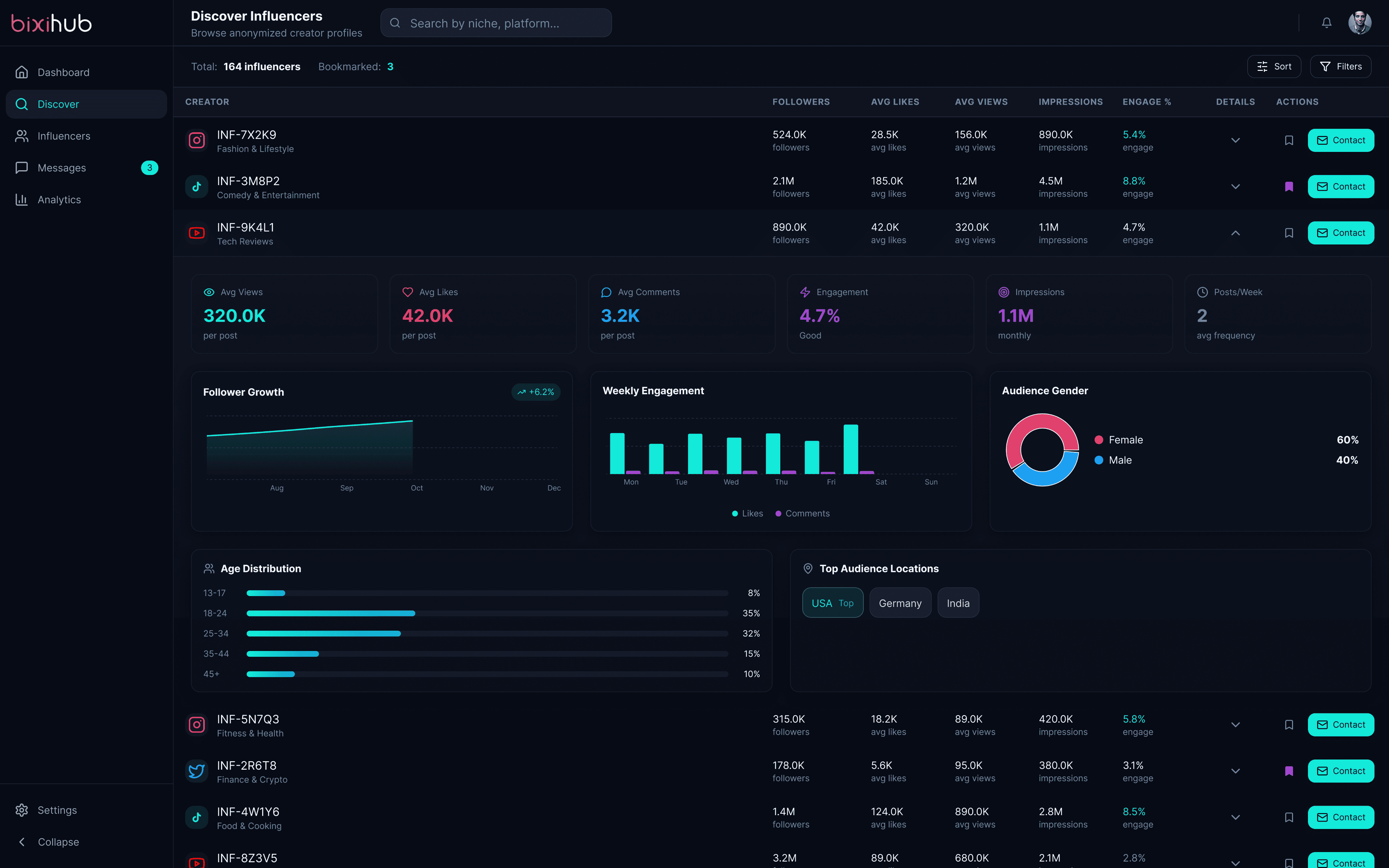
A small concern the team had, grew ever bigger, until it because the central focus point for the founders, and often the main topic of each meeting. The business plan was that bixihub (soon to be bix) would take a percentage cut of each contract. But what was preventing users from simply going off site and handlings the financial side of the project elsewhere? For a small team, still funded out-of-pocket by the founders, contract creation and enforcement presented a challenging feature to implement, a legally tricky issue, and one that would be difficult to mediate with limited manpower.
The project shifted towards anonymization. The idea was that users would instead pay a fixed fee to be told the identify of a creator, at which point they could conduct business however they please. While it “solved” the problem, nobody was entirely happy with the solution. The pace of progress slowed to a crawl, and team morale started dropping.
At this point in the project, working on bix had become a project on which I work on every week, how. Three developers had also joined the team in similar capacities.
A small concern the team had, grew ever bigger, until it because the central focus point for the founders, and often the main topic of each meeting. The business plan was that bixihub (soon to be bix) would take a percentage cut of each contract. But what was preventing users from simply going off site and handlings the financial side of the project elsewhere? For a small team, still funded out-of-pocket by the founders, contract creation and enforcement presented a challenging feature to implement, a legally tricky issue, and one that would be difficult to mediate with limited manpower.
The project shifted towards anonymization. The idea was that users would instead pay a fixed fee to be told the identify of a creator, at which point they could conduct business however they please. While it “solved” the problem, nobody was entirely happy with the solution. The pace of progress slowed to a crawl, and team morale started dropping.
joining fulltime
User research and a new direction revives momentum and pushes the project further than ever
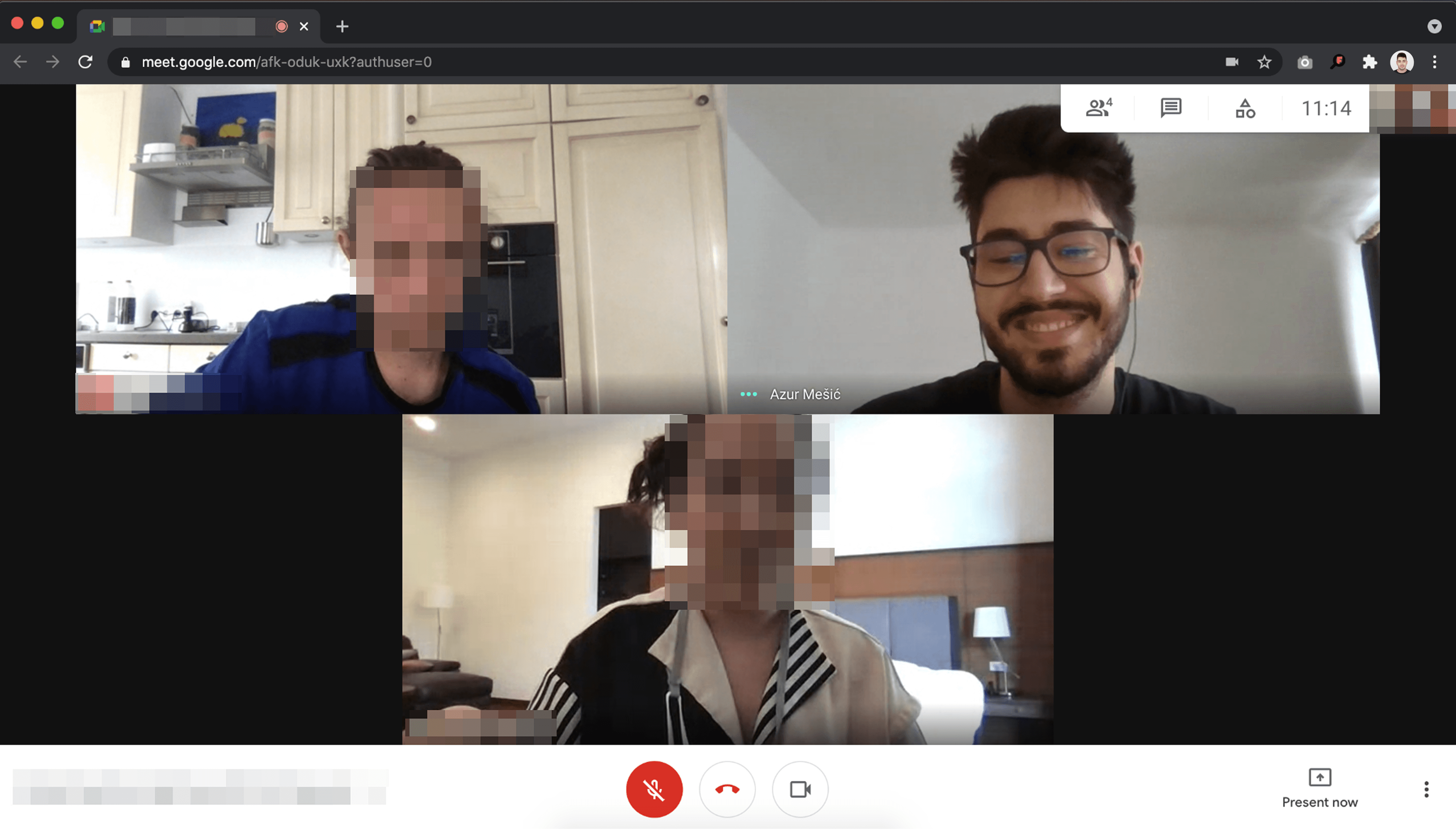
I was invited to join full time after a couple months of freelancing for them. One of the founders, the CEO, had liked some of the ideas I previously had, and felt that I could help move the project forward. At my request we organized 16 interviews; 5 business owners that had previously worked with creators/influencers, and 9 creators with accounts covering YouTube, Instagram, TikTok and Twitch and follower counts that range from 1000 to 1.000.000.
Besides wanting to understand our user base better, I also had a series of tests for our participants. I had brought up UX concerns with the anonymization concept before, but lacked the data to back it up. The user studies were my chance to prove that issues were indeed present.
I was invited to join full time after a couple months of freelancing for them. One of the founders, the CEO, had liked some of the ideas I previously had, and felt that I could help move the project forward. At my request we organized 16 interviews; 5 business owners that had previously worked with creators/influencers, and 9 creators with accounts covering YouTube, Instagram, TikTok and Twitch and follower counts that range from 1000 to 1.000.000.
Besides wanting to understand our user base better, I also had a series of tests for our participants. I had brought up UX concerns with the anonymization concept before, but lacked the data to back it up. The user studies were my chance to prove that issues were indeed present.
results
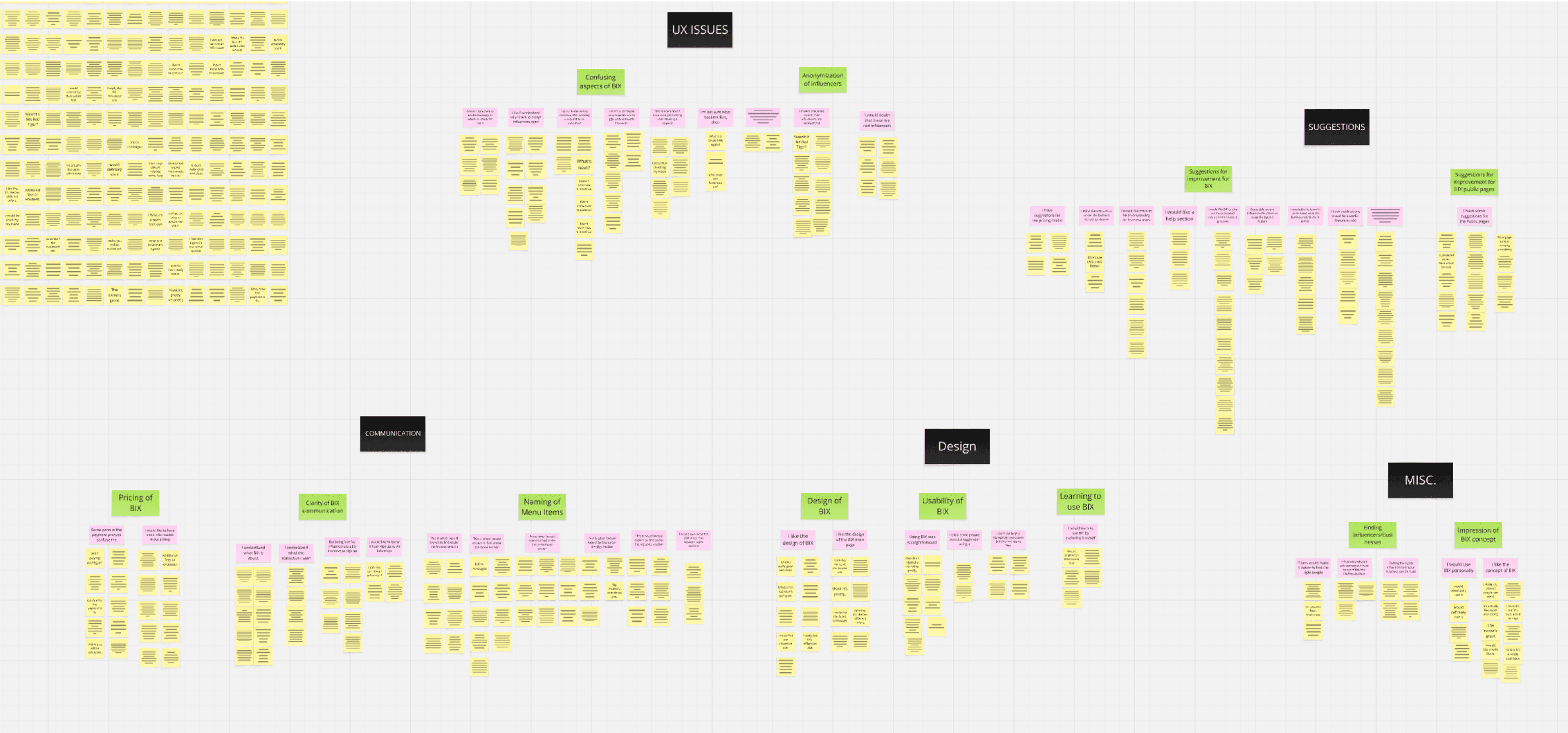
After transcribing and analyzing the interviews using affinity mapping, key issues emerged as a direct result of anonymization. Both groups did not understand why creators had to be anonymized. Brands felt that key factors that determine if they would want to hire somebody were hidden - their content and their price. Furthermore, users brought up the issue that a creator’s political views matter as well which only become evident based on their content. Creators on the other hand felt that they were losing their unique voice, and that smaller creators stood no chance next to bigger ones since it’s numbers that represent them instead of their content. Furthermore, users consistently failed to remember creators that looked interesting, and felt that the interface was too different than what they normally use.
After transcribing and analyzing the interviews using affinity mapping, key issues emerged as a direct result of anonymization. Both groups did not understand why creators had to be anonymized. Brands felt that key factors that determine if they would want to hire somebody were hidden - their content and their price. Furthermore, users brought up the issue that a creator’s political views matter as well which only become evident based on their content. Creators on the other hand felt that they were losing their unique voice, and that smaller creators stood no chance next to bigger ones since it’s numbers that represent them instead of their content. Furthermore, users consistently failed to remember creators that looked interesting, and felt that the interface was too different than what they normally use.
The final concept shift
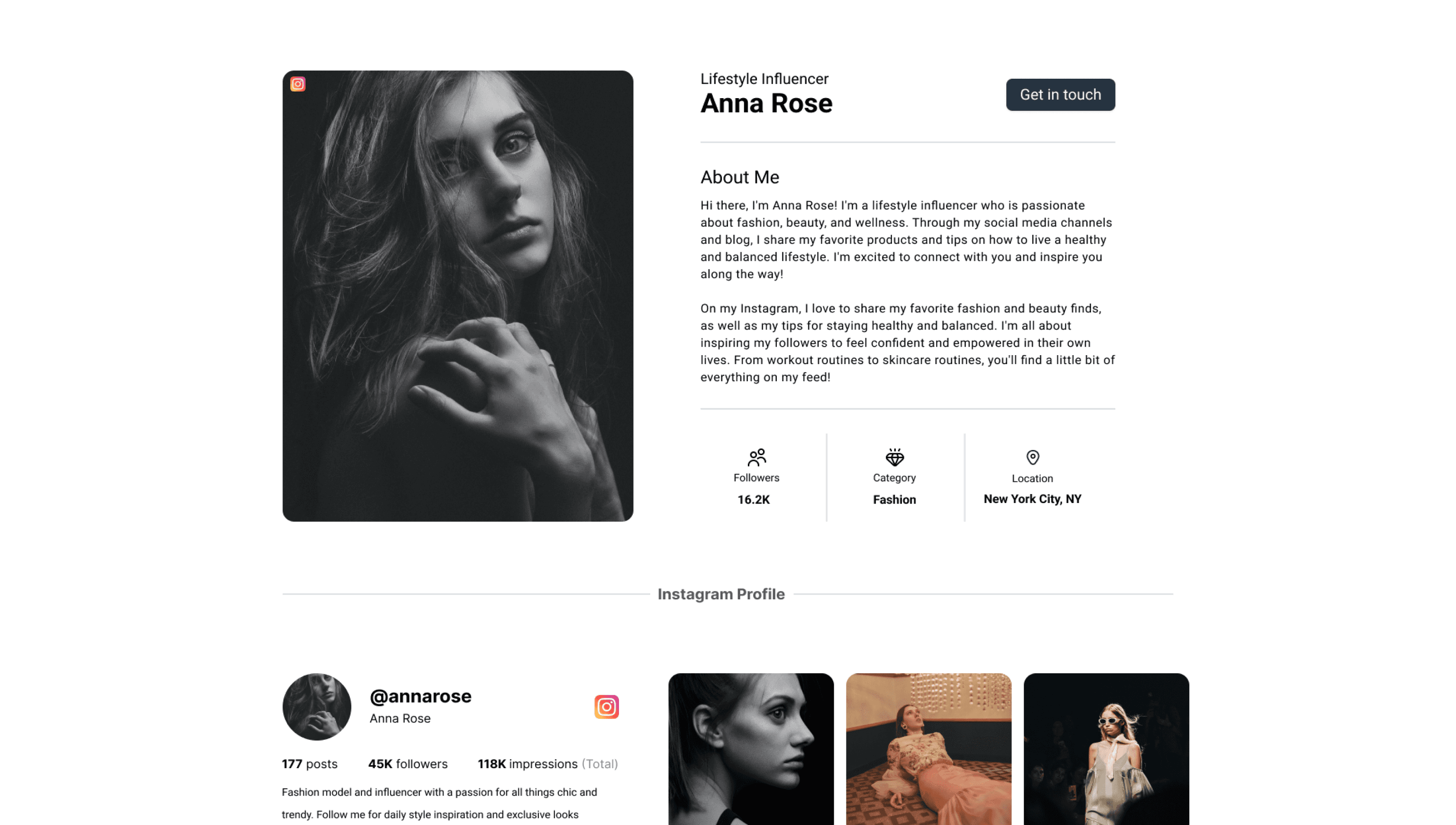
While the team discussed how to address the new feedback, I started playing around with a new concept. A week later I revealed it to the CEO, and together we continued developing the idea until it was ready to be pitched to the rest of the team. For the new concept I wanted to go in a completely different direction. Open, instead of closed. Image driven, instead of number based. I wanted to give creators the opportunity to present themselves as they want, and in a way in which they are used to doing it.
While the team discussed how to address the new feedback, I started playing around with a new concept. A week later I revealed it to the CEO, and together we continued developing the idea until it was ready to be pitched to the rest of the team. For the new concept I wanted to go in a completely different direction. Open, instead of closed. Image driven, instead of number based. I wanted to give creators the opportunity to present themselves as they want, and in a way in which they are used to doing it.
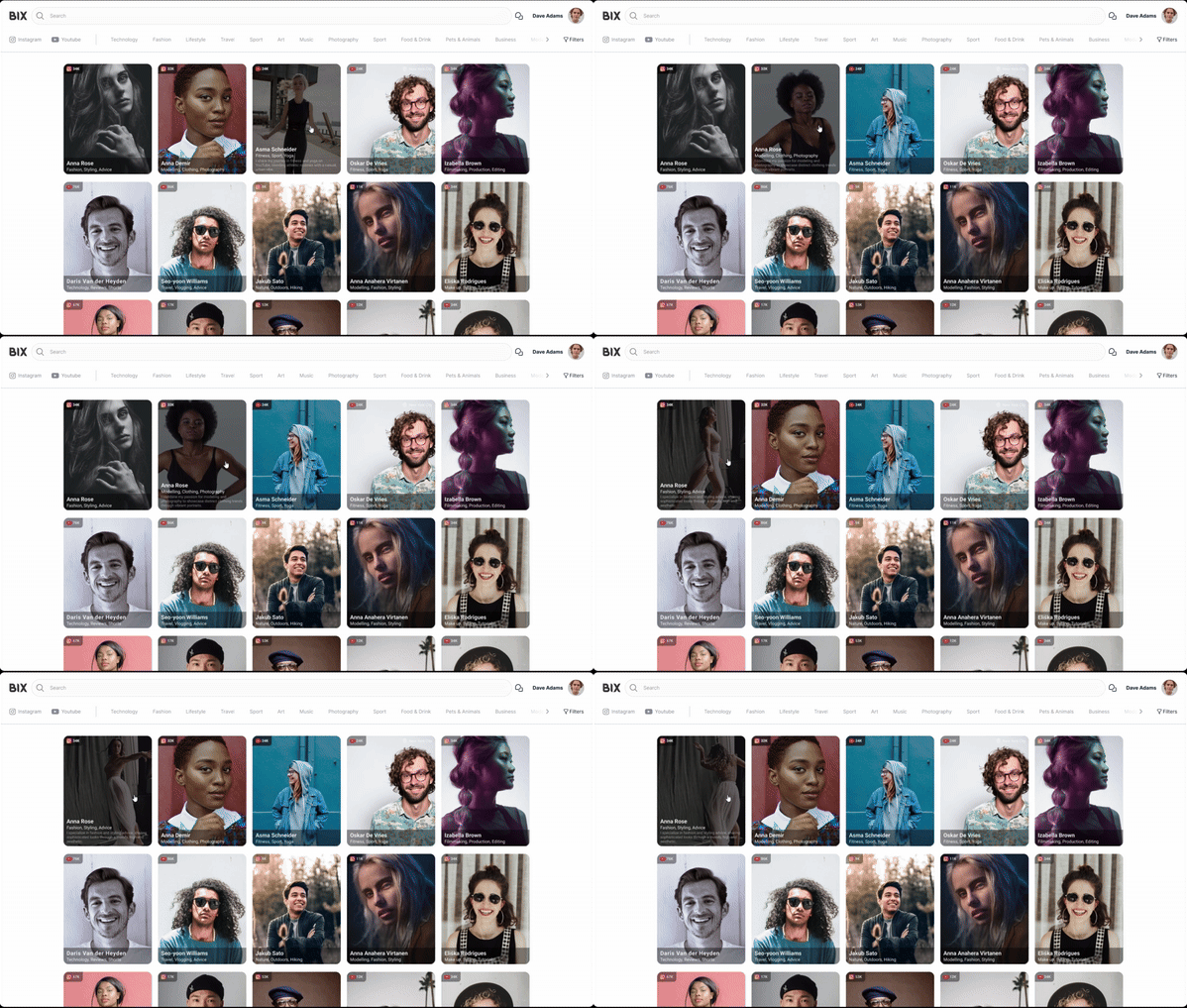
I also aimed to create an interesting and engaging experience for the brands browsing the page. I wanted them to be able to imagine their product in the hands of one of our creators on our page, instead of only comparing numbers.
I also aimed to create an interesting and engaging experience for the brands browsing the page. I wanted them to be able to imagine their product in the hands of one of our creators on our page, instead of only comparing numbers.
a new strategy
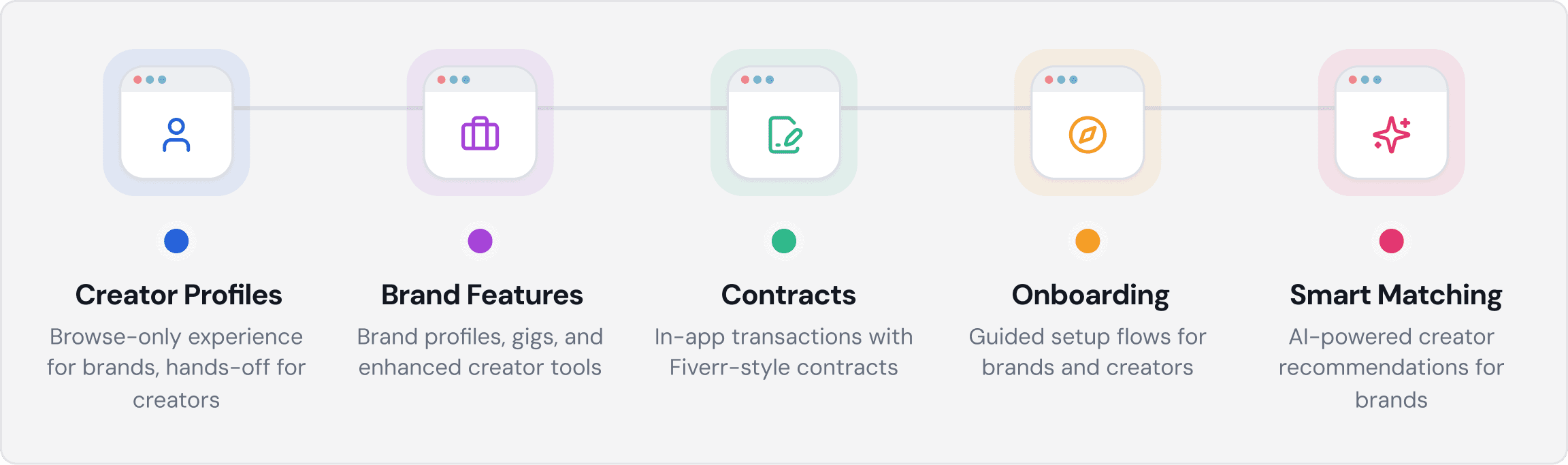
Along with screens, I also had a proposal for launching the product. Our development up until this point was more similar to a waterfall approach. We were adding new features, but it was never enough to be released. Part of the concer
Along with screens, I also had a proposal for launching the product. Our development up until this point was more similar to a waterfall approach. We were adding new features, but it was never enough to be released. Part of the concer
release
Within a few months, we released bix and followed up that release with all the other planned features
Following the plan, we launched bix as a completely free platform with a focus on letting influencers decide how to showcase themselves. The idea behind this initial release was that signing up is a very risk-free move for creators. Because for every hour that creators spend on their chosen platform, it will lead to ROI. Therefore, if our platform was demanding significant time investments from them it would no longer be “free” for them.
Therefore, unlike competitor sites, we made signing up very simple and straightforward, with the only requirement being that they must connect a social media profile with at least 1000 followers/subscribers. Within 5-10 minutes they can then create their profile - a free public advertisement of their entire network - and the work for them is done (for now).
Following the plan, we launched bix as a completely free platform with a focus on letting influencers decide how to showcase themselves. The idea behind this initial release was that signing up is a very risk-free move for creators. Because for every hour that creators spend on their chosen platform, it will lead to ROI. Therefore, if our platform was demanding significant time investments from them it would no longer be “free” for them.
Therefore, unlike competitor sites, we made signing up very simple and straightforward, with the only requirement being that they must connect a social media profile with at least 1000 followers/subscribers. Within 5-10 minutes they can then create their profile - a free public advertisement of their entire network - and the work for them is done (for now).
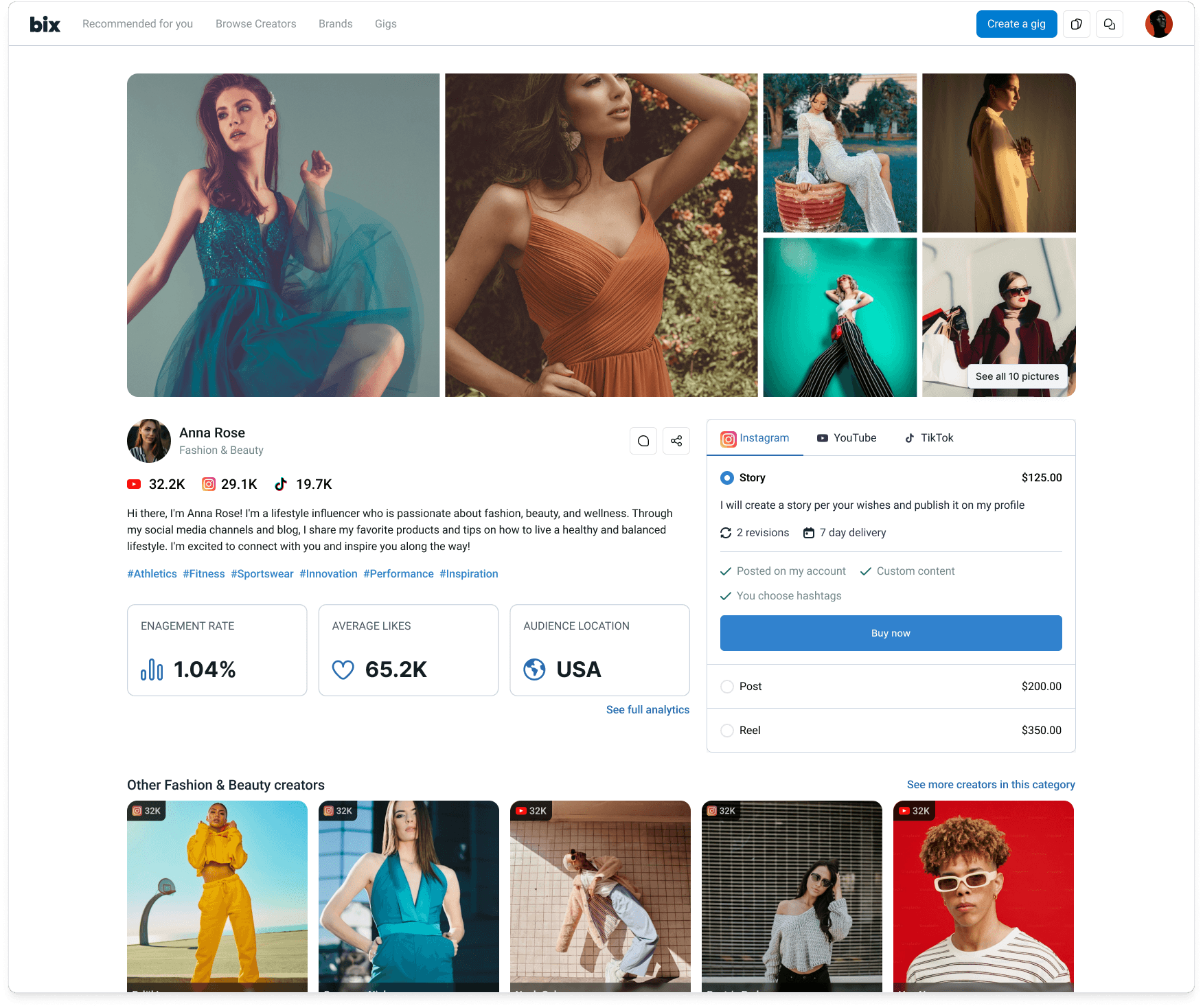
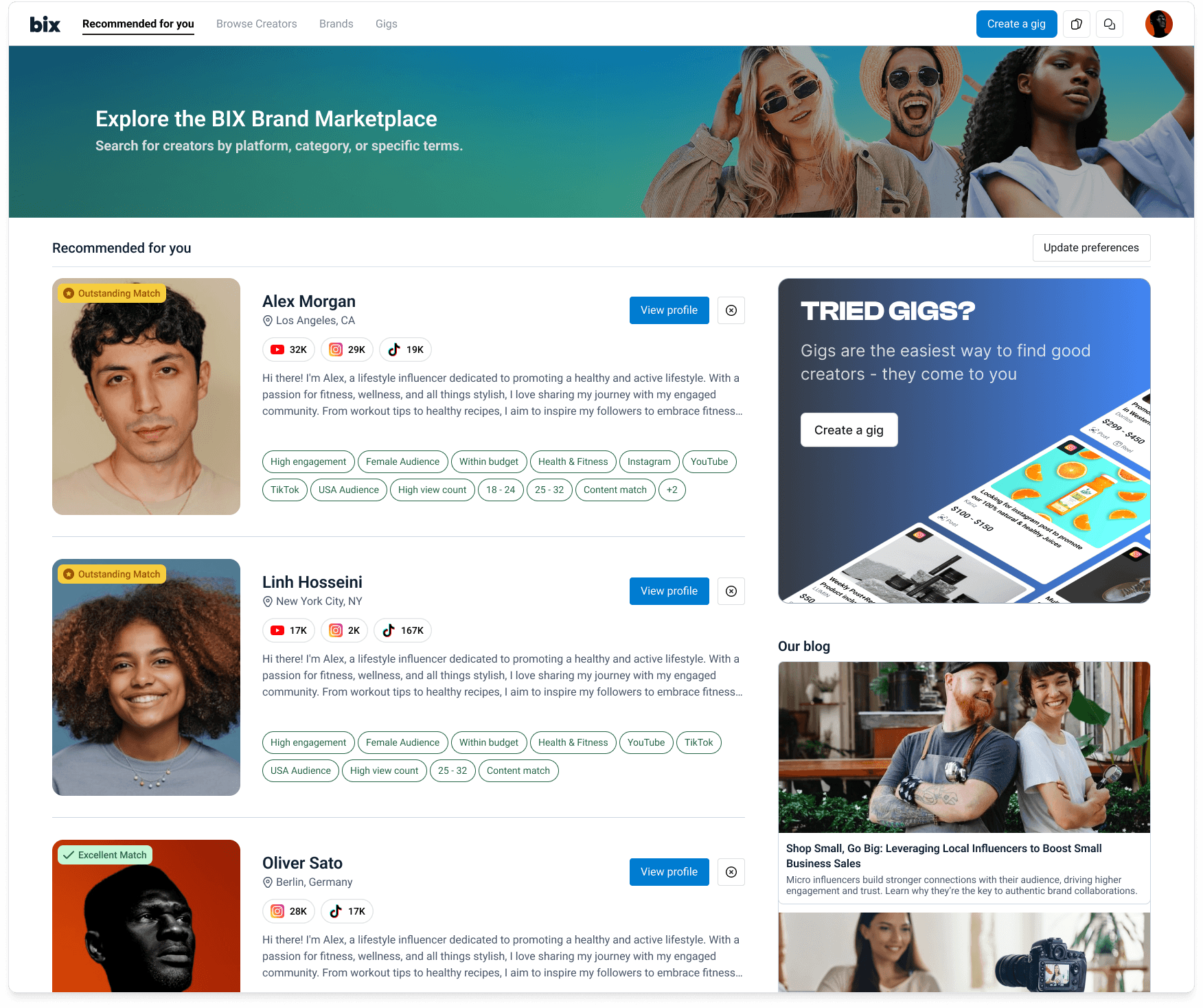
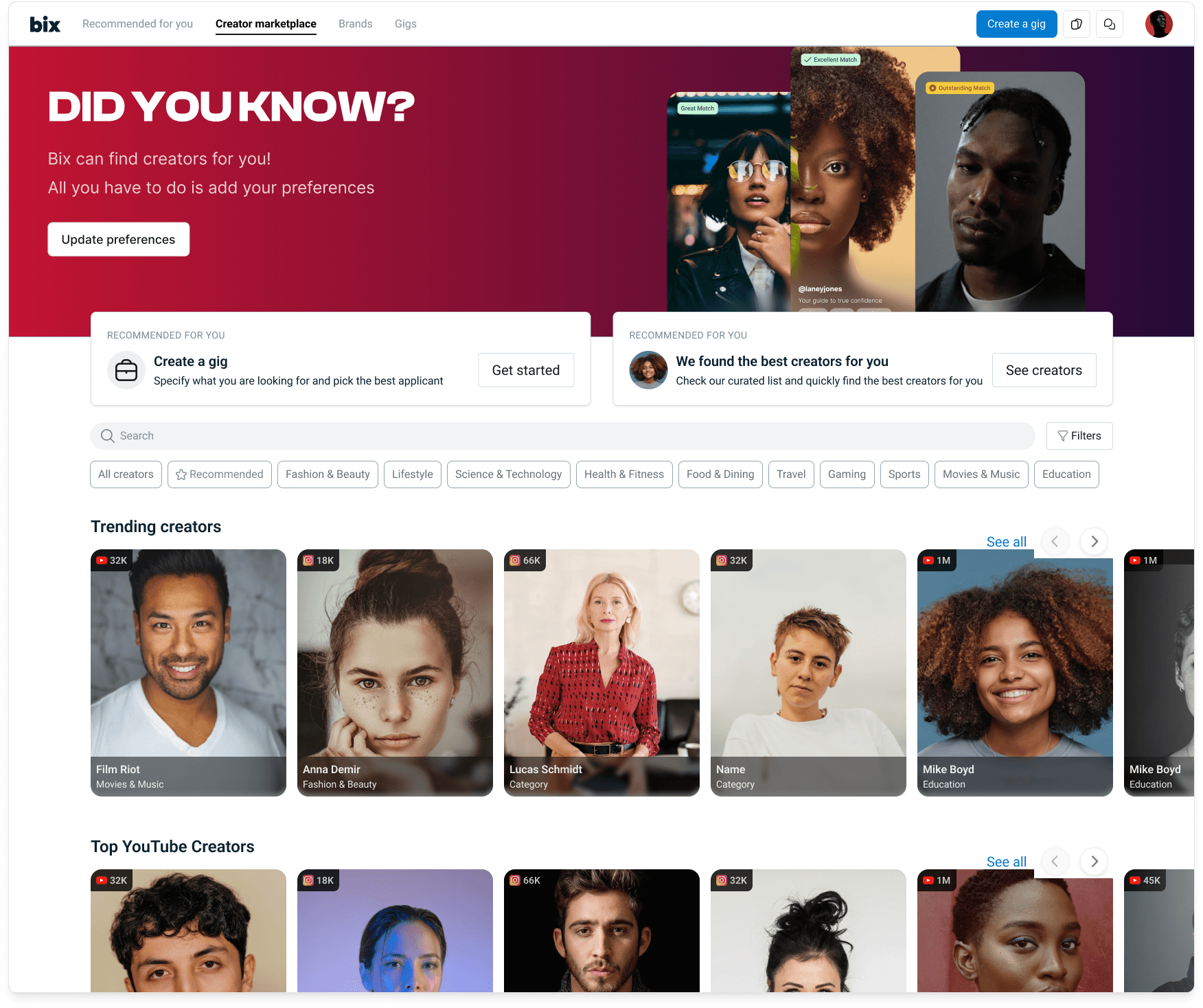
Once a certain number of creators joined bix, brands started joining organically. While at first it was only brands reaching out to creators, with the release of gigs, recommendations, and contracts, the interaction became much more two-sided.
Once a certain number of creators joined bix, brands started joining organically. While at first it was only brands reaching out to creators, with the release of gigs, recommendations, and contracts, the interaction became much more two-sided.
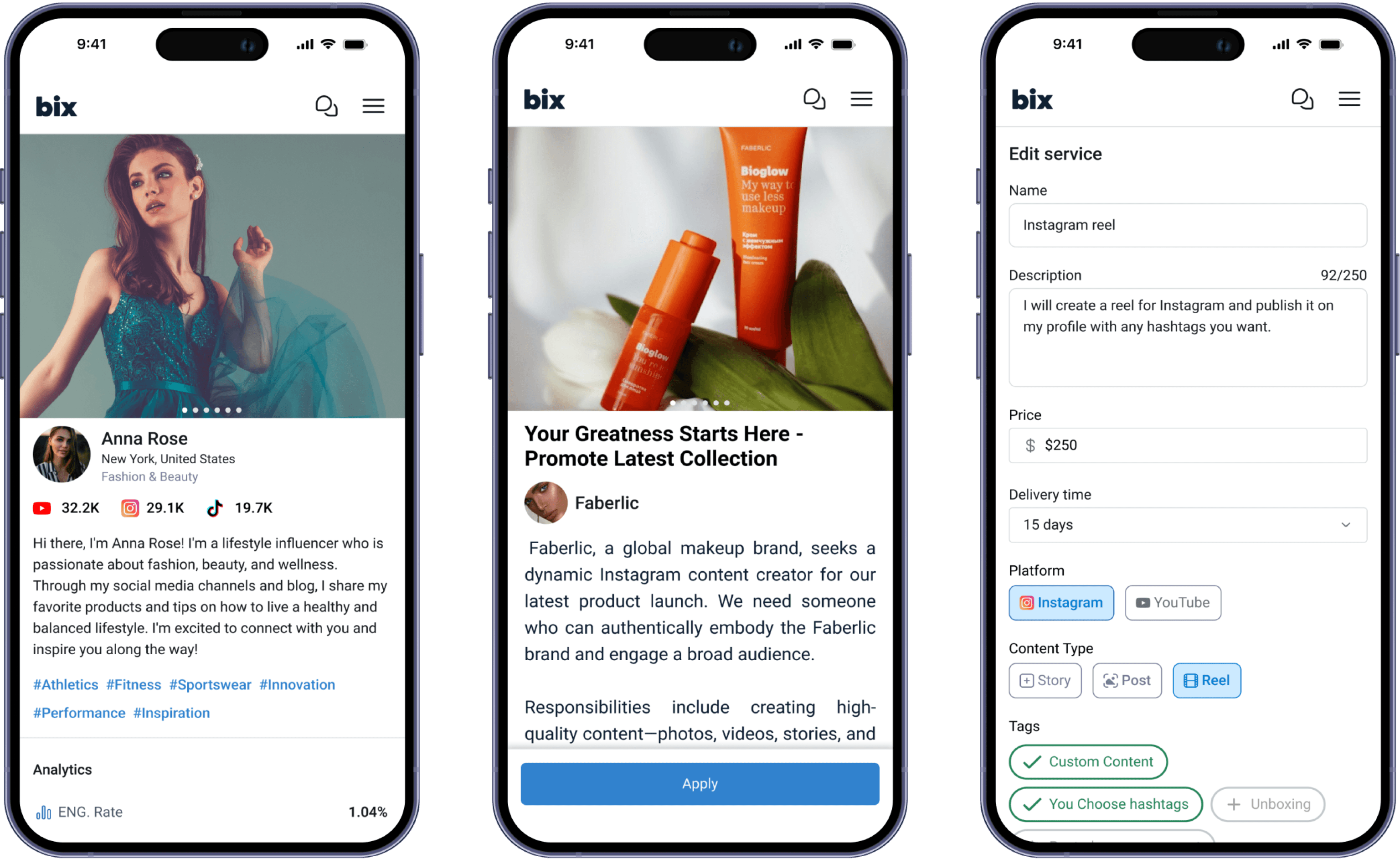
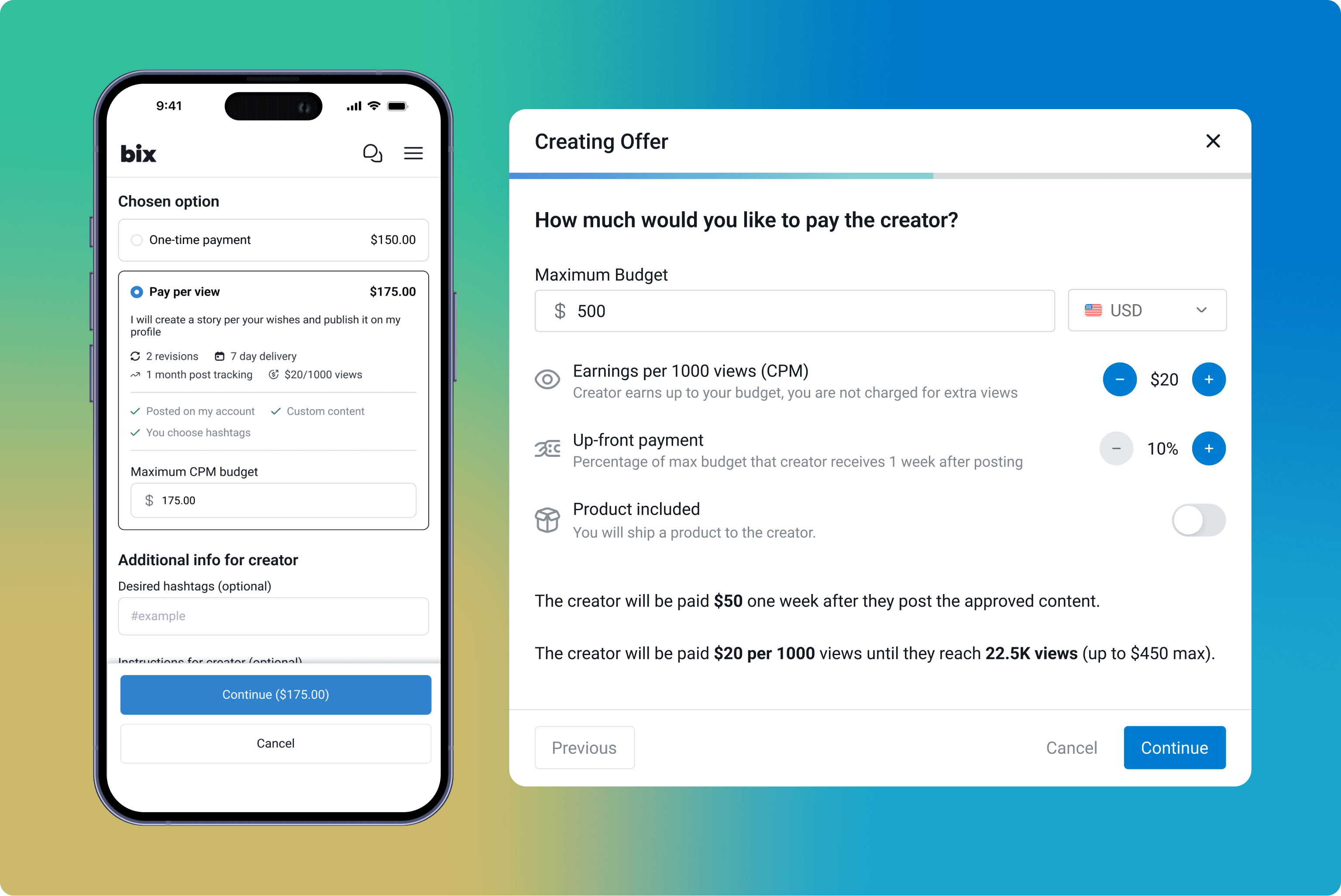
Contracts was when bix really started taking off, and most importantly, when bix finally started having income. From each contract that was done on bix, bix took a small percent as a service fee.
Contracts was when bix really started taking off, and most importantly, when bix finally started having income. From each contract that was done on bix, bix took a small percent as a service fee.
release
GROWTH
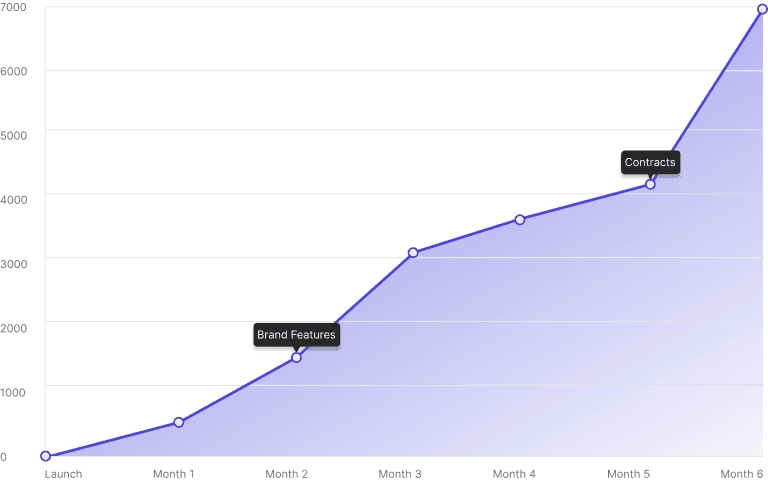
Bix steadily grew its user base with each new feature that we rolled out.
Within our second month we had already hit 1000 users, and we kept steadily increasing out user based. And with each new feature release, and each new marketing push we saw significant jumps.
Within our second month we had already hit 1000 users, and we kept steadily increasing out user based. And with each new feature release, and each new marketing push we saw significant jumps.
Launch
Month 1
Month 2
Month 3
Month 4
Month 5
Month 6
7000
6000
5000
4000
3000
2000
1000
0
Brand Features
Contracts