Hermes QR
Role
Role
UX/UI Designer
UX/UI Designer
team
team
1 UX/UI Designer
1 UX/UI Designer
1 backend developer
1 backend developer
1 frontend developer
1 frontend developer
contribution
contribution
Research & Data analysis
Research & Data analysis
user interface design
user interface design
Product design
Product design
timeline
timeline
6+ months
6+ months
overview
overview
Can we successfully introduce a new way to handle orders to a market that’s unfamiliar with it?
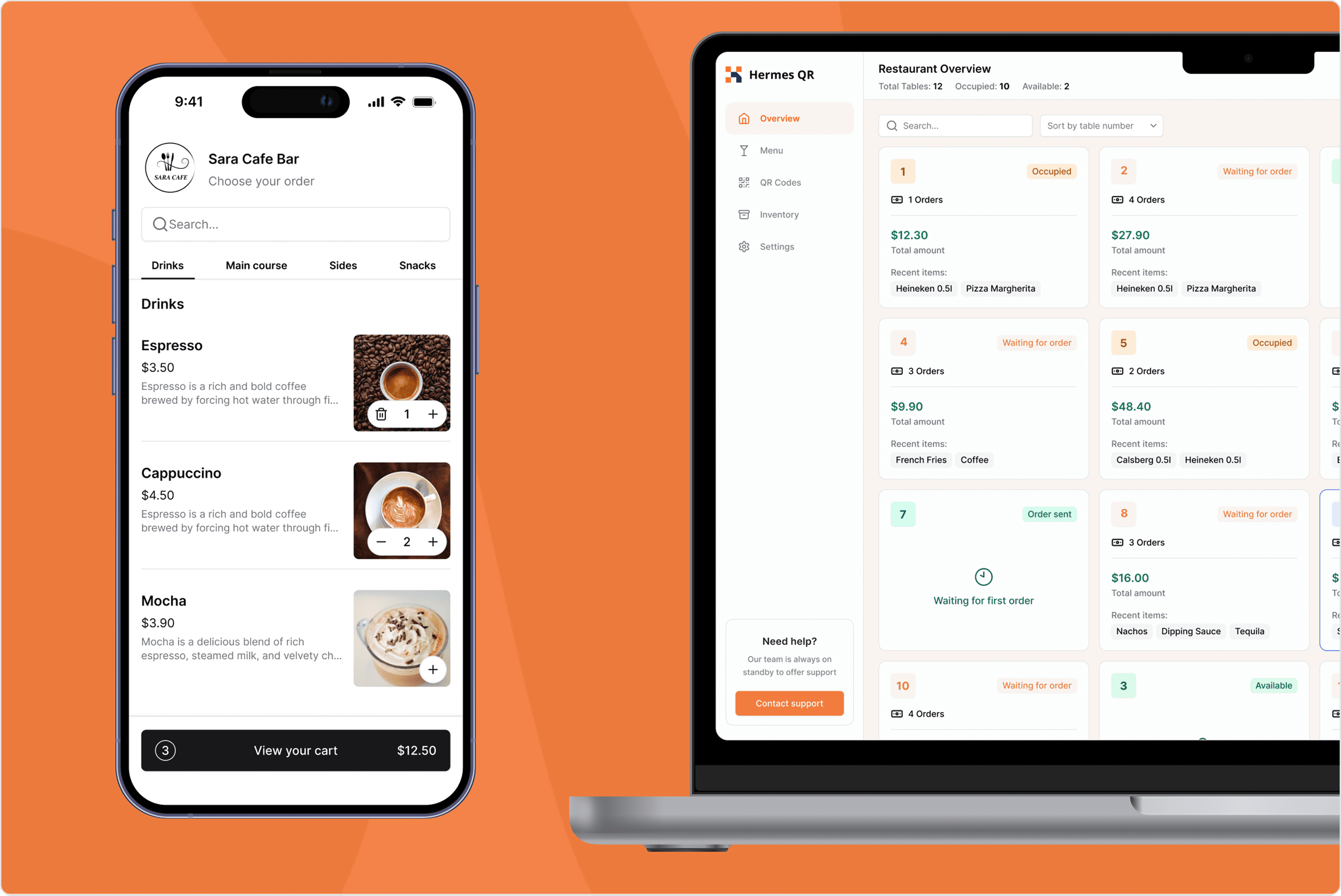
Hermes QR is a digital ordering platform for hospitality venues. Guests scan a QR code at their table, browse the menu, and place orders directly from their phone — no app download, no waiting for staff. Orders appear instantly on the venue's dashboard, reducing wait times during peak hours and freeing up staff to focus on service.
QR ordering is already widespread in the US, Australia, and Asia but remains largely untapped in Europe. Hermes QR brings that same model to European venues — cafes, bars, and restaurants looking to increase table turnover, reduce missed orders, and handle busy periods without adding headcount.
Hermes QR is currently in it’s pilot phase.
Hermes QR is a digital ordering platform for hospitality venues. Guests scan a QR code at their table, browse the menu, and place orders directly from their phone — no app download, no waiting for staff. Orders appear instantly on the venue's dashboard, reducing wait times during peak hours and freeing up staff to focus on service.
QR ordering is already widespread in the US, Australia, and Asia but remains largely untapped in Europe. Hermes QR brings that same model to European venues — cafes, bars, and restaurants looking to increase table turnover, reduce missed orders, and handle busy periods without adding headcount.
Hermes QR is currently in it’s pilot phase.
VEryfing the concept
VEryfing the concept
The idea came from personal experience, and wanting to solve a common frustration
The idea came from one of the co-founders. He was frequently frustrated with struggling to flag down a waiter to order, and also when wanting to pay. Whether it was due to his seating being out of sight, the venue being crowded, or any other reason, it was frequent enough that he wanted to address the problem. The other co-founder and I joined right at the beginning, while Hermes was just a napkin concept.
The idea came from one of the co-founders. He was frequently frustrated with struggling to flag down a waiter to order, and also when wanting to pay. Whether it was due to his seating being out of sight, the venue being crowded, or any other reason, it was frequent enough that he wanted to address the problem. The other co-founder and I joined right at the beginning, while Hermes was just a napkin concept.
desktop research
desktop research
QR ordering is uncommon in Europe (or at least in the part we have visited), so our starting point was investigating if the idea has merit. We started with desktop research. We wanted to understand where this technology was already established, what kind of results it was producing. We looked at industry reports and adoption data from the US, Australia , and Asia. Our most important findings were:
QR ordering is uncommon in Europe (or at least in the part we have visited), so our starting point was investigating if the idea has merit. We started with desktop research. We wanted to understand where this technology was already established, what kind of results it was producing. We looked at industry reports and adoption data from the US, Australia , and Asia. Our most important findings were:
56%
of US restaurant owners and managers use QR codes for digital menus and ordering
of US restaurant owners and managers use QR codes for digital menus and ordering
20%
higher ordering using digital ordering over in-person ordering
higher ordering using digital ordering over in-person ordering
25%
higher table turnover
higher table turnover
68%
of Gen Z and 78% of Millennials in the US express preference for QR code menus.
of Gen Z and 78% of Millennials in the US express preference for QR code menus.
35%
Lower labor costs for order taking and payment processing
Lower labor costs for order taking and payment processing
interviewing venue owners
interviewing venue owners
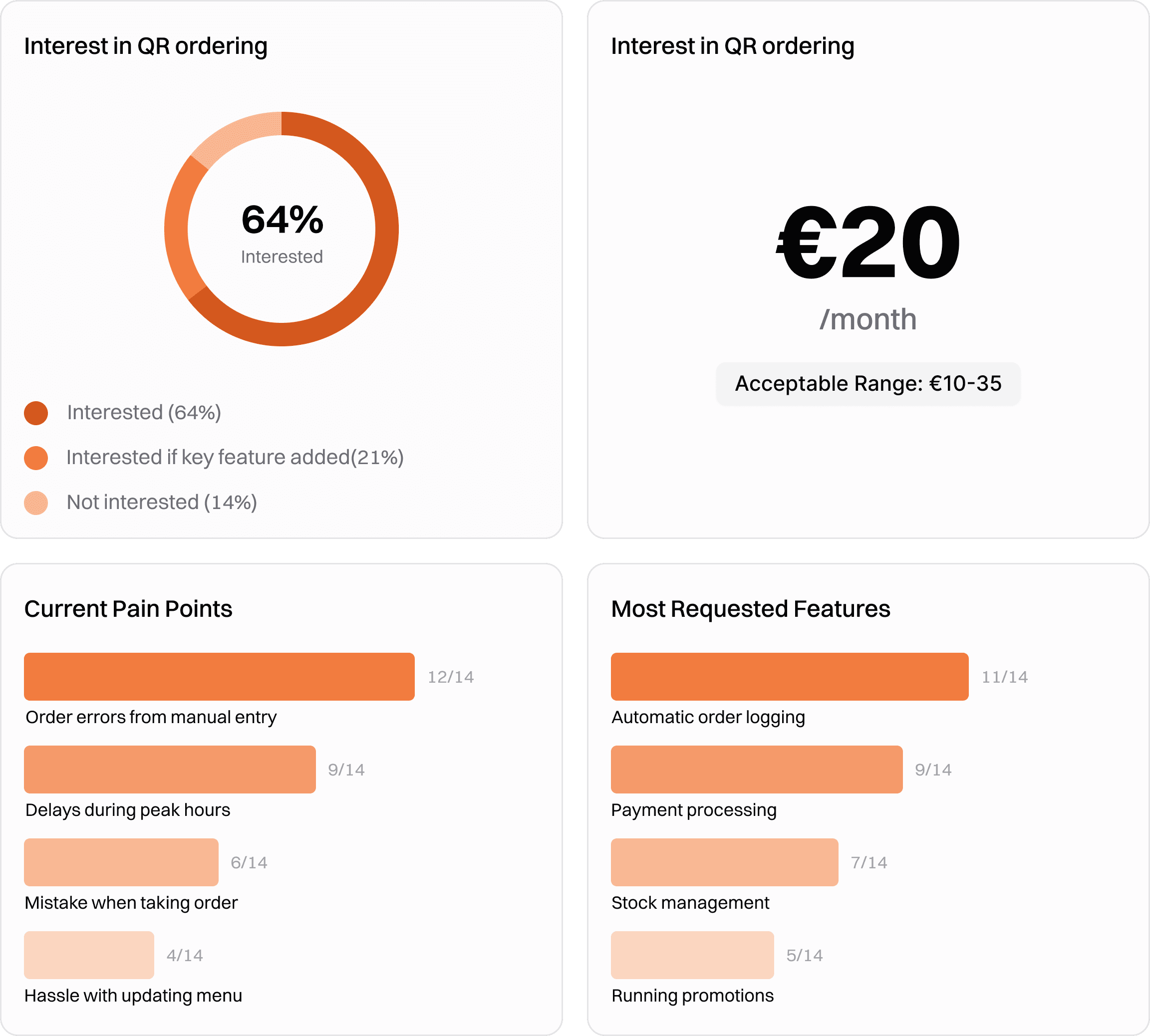
The Idea passed our initial hurdle. I then designed a short interview for venue owners, and we started reaching out local venues. 14 of them agreed to speak to us. After talking to them about the initial concept, the idea was received positively, and with openness. We also learned what their current pain points were, and which feature would make our solution more attractive for them. Most importantly, the majority were interest in trying such a solution.
The Idea passed our initial hurdle. I then designed a short interview for venue owners, and we started reaching out local venues. 14 of them agreed to speak to us. After talking to them about the initial concept, the idea was received positively, and with openness. We also learned what their current pain points were, and which feature would make our solution more attractive for them. Most importantly, the majority were interest in trying such a solution.
Getting started
Getting started
The MVP had to be small and manageable for out small team
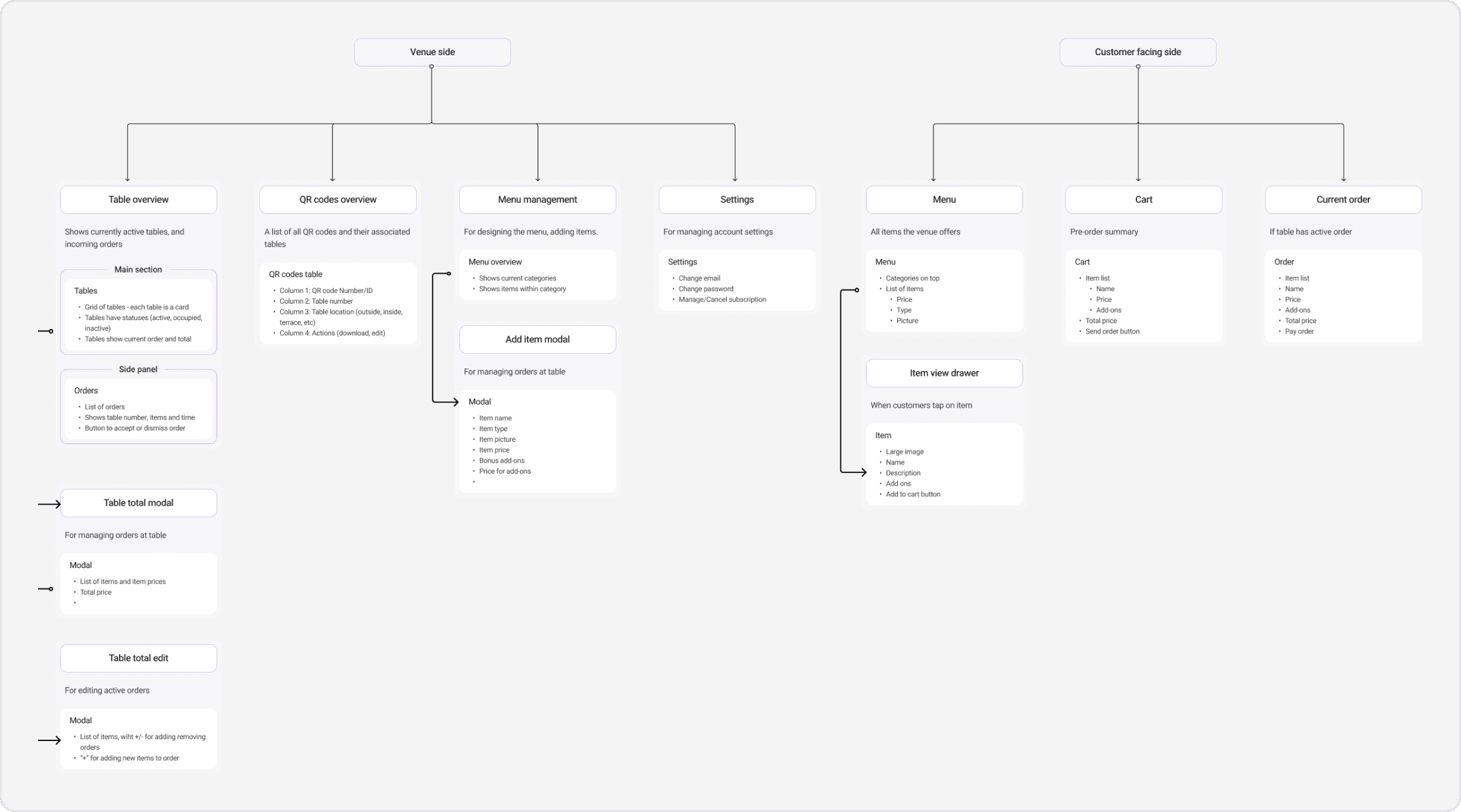
As 3 experience people in the IT industry, we know that being unrealistically ambitious is what causes sprints to be late, and perfect is the enemy of done. We set out to define an MVP, where the emphasis is really on the “minimum” parts. We might have even gone too far initially, as we even decided to remove the login/register flow for the very first version. I created the product information architecture based on our agreed upon options
As 3 experience people in the IT industry, we know that being unrealistically ambitious is what causes sprints to be late, and perfect is the enemy of done. We set out to define an MVP, where the emphasis is really on the “minimum” parts. We might have even gone too far initially, as we even decided to remove the login/register flow for the very first version. I created the product information architecture based on our agreed upon options
Low-fidelity designs
Low-fidelity designs
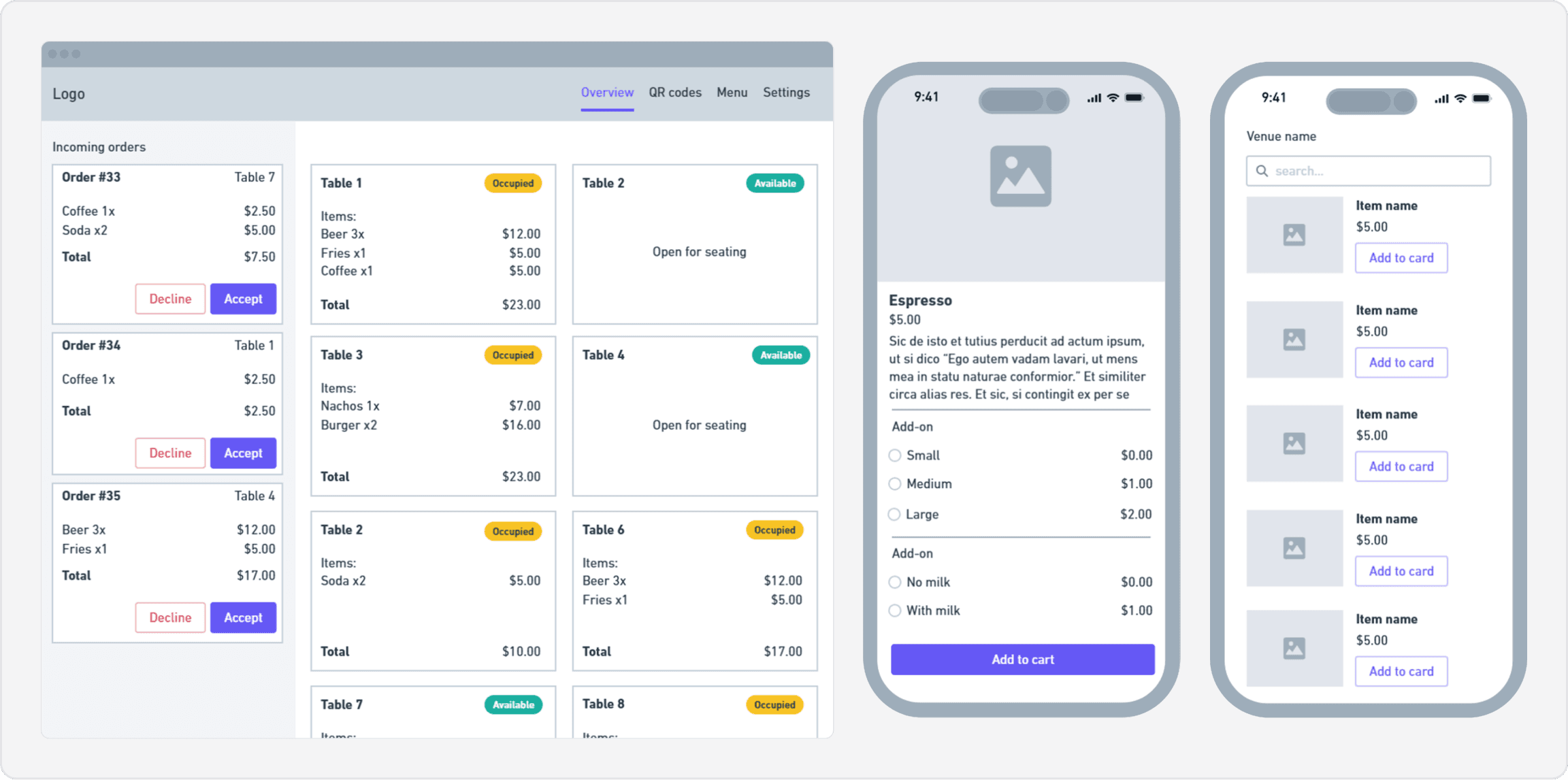
Then I made low-fidelity sketches which we used to work out the structure and layout that we want to use in the app.
Then I made low-fidelity sketches which we used to work out the structure and layout that we want to use in the app.
high-fidelity and internal testing
high-fidelity and internal testing
The MVP became functional quickly, but significant testing was required
I started working on the high-fidelity designs, while the two developers started working on the backend, and prepping the front-end. To keep the effort reasonable for a small team, we agreed to use an existing components library. We opted for shadcn/ui.
I started working on the high-fidelity designs, while the two developers started working on the backend, and prepping the front-end. To keep the effort reasonable for a small team, we agreed to use an existing components library. We opted for shadcn/ui.
Venue Overview
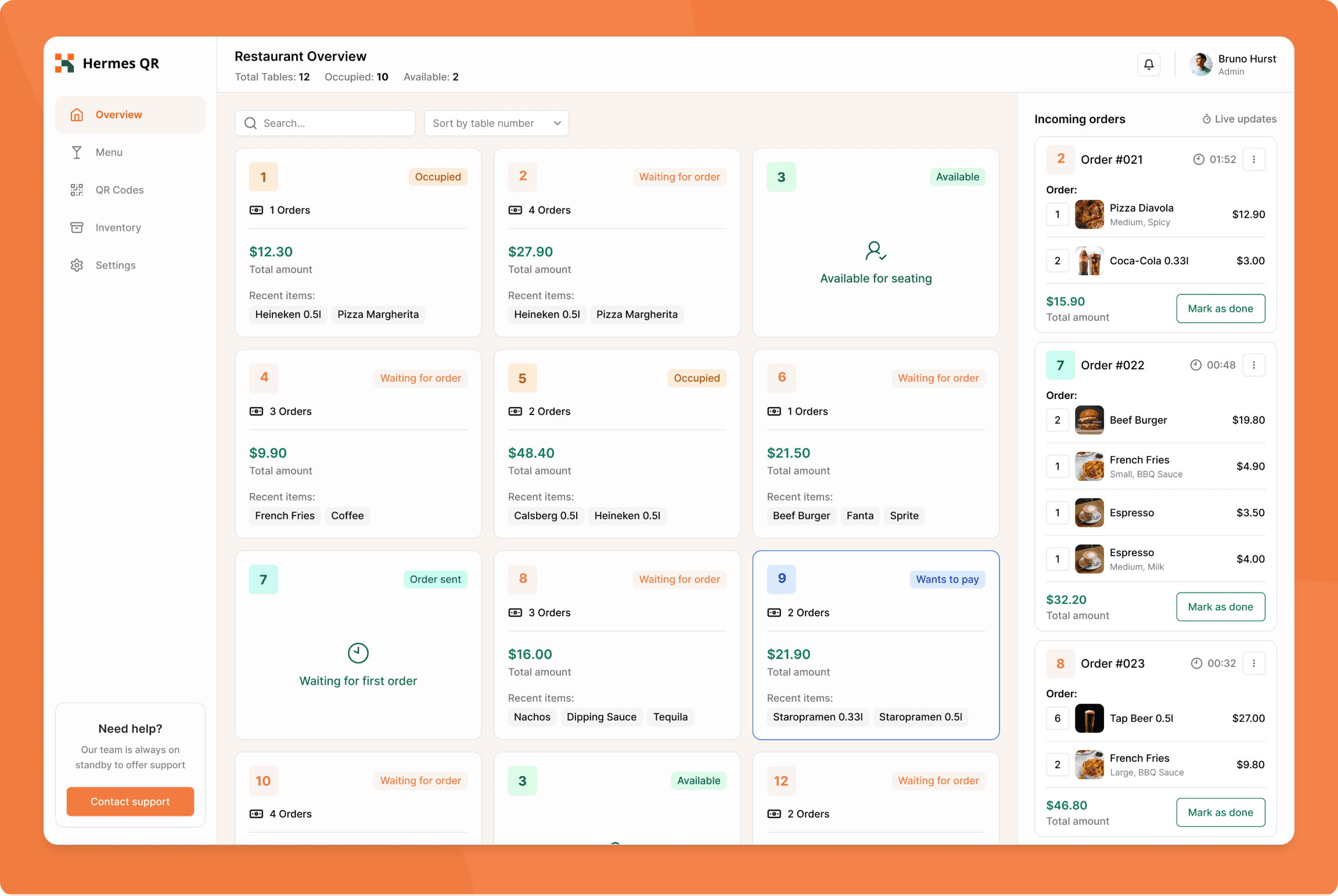
The venue side of the product is the more complex one. Venue staff would handle all orders through the Hermes QR interface, design and customize their menus, and track inventory.
The screen where they would spend the most time on is the venue overview. Here they would see and manage all of their tables and their respective information, as well as all incoming orders.
The venue side of the product is the more complex one. Venue staff would handle all orders through the Hermes QR interface, design and customize their menus, and track inventory.
The screen where they would spend the most time on is the venue overview. Here they would see and manage all of their tables and their respective information, as well as all incoming orders.
Menu management
Menu management
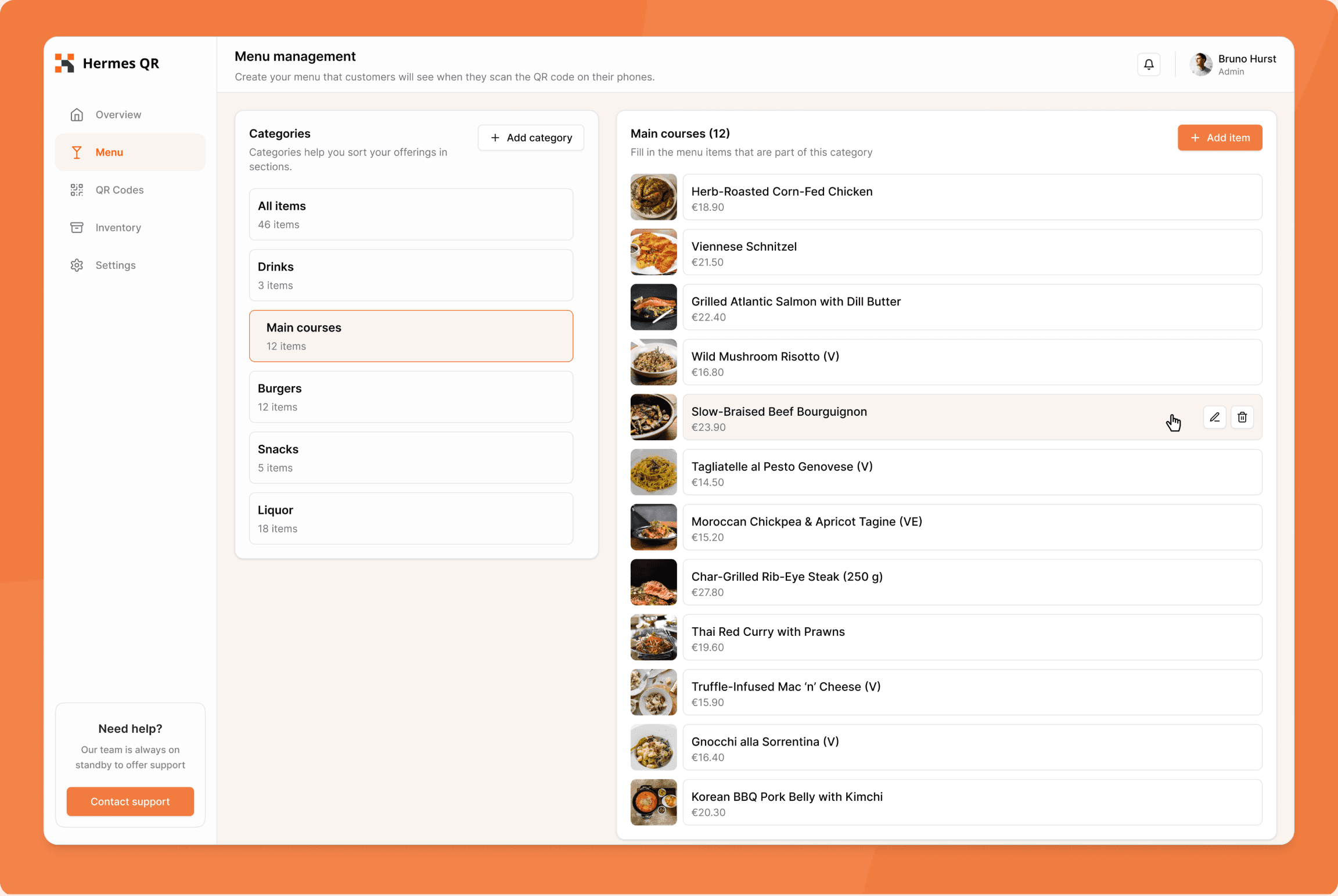
On the menu screen users can create categories, and fill them menu items. The structure they create here, will be the same structure that users see on their phones, once their scan the QR code.
On the menu screen users can create categories, and fill them menu items. The structure they create here, will be the same structure that users see on their phones, once their scan the QR code.
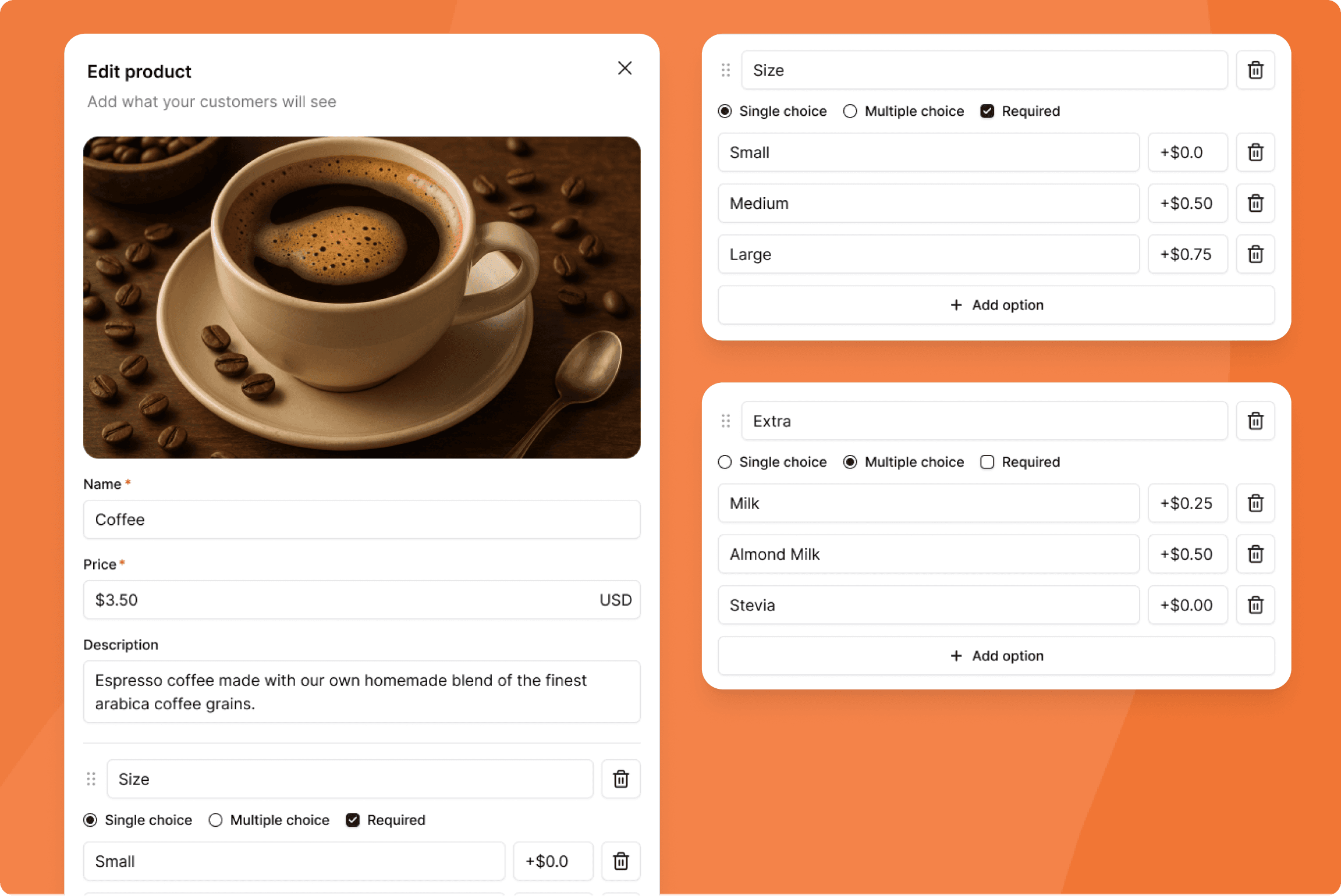
When creating menu items, they can of course include the basic information like the picture, name or price. But we also offer options for customizable fields, where they can add new options, price each separately, and determine if only one can be selected or multiple selections are allowed.
When creating menu items, they can of course include the basic information like the picture, name or price. But we also offer options for customizable fields, where they can add new options, price each separately, and determine if only one can be selected or multiple selections are allowed.
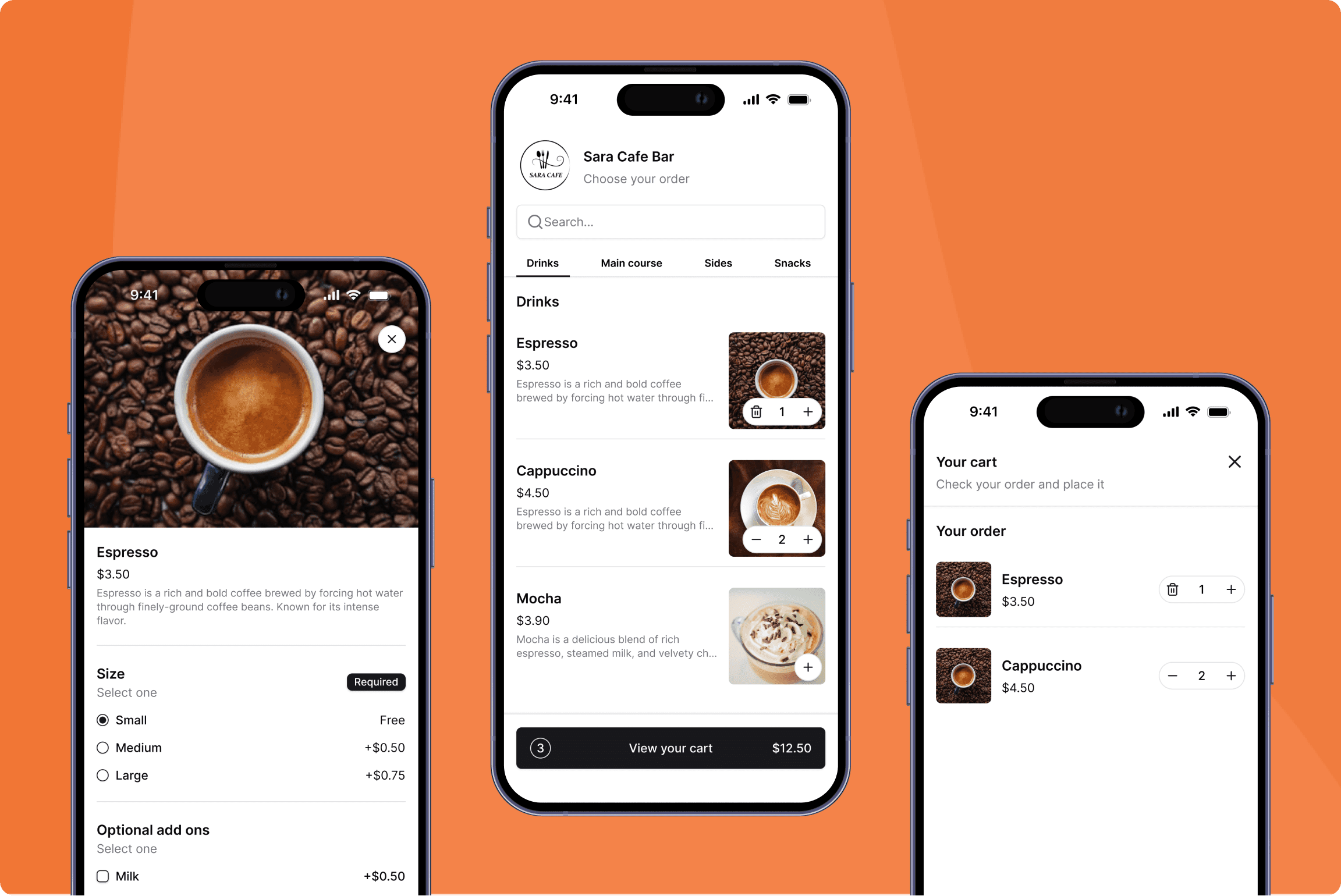
Customer facing side
Customer facing side
When creating menu items, they can of course include the basic information like the picture, name or price. But we also offer options for customizable fields, where they can add new options, price each separately, and determine if only one can be selected or multiple selections are allowed.
NOTE: In order to not clash with an establishment’s brand, we decided to keep our user facing colors neutral, until we release menu customization
When creating menu items, they can of course include the basic information like the picture, name or price. But we also offer options for customizable fields, where they can add new options, price each separately, and determine if only one can be selected or multiple selections are allowed.
NOTE: In order to not clash with an establishment’s brand, we decided to keep our user facing colors neutral, until we release menu customization
pILOT PHASE
pILOT PHASE
we organized 5 pilots and started getting real feedback
We offered our MVP for free for 4 months, to 5 local food & drink establishments. We picked establishments which we also frequent as customers, both because we already have rapport with the staff, and because it gives us a chance to experience our own product as our customers do, and do so in natural way. Naturally, the pilots encountered a varity of issues, including bugs we missed during testing, problems with payment processing, and device specific issues. But I will focus on user experience issues that arose.
We offered our MVP for free for 4 months, to 5 local food & drink establishments. We picked establishments which we also frequent as customers, both because we already have rapport with the staff, and because it gives us a chance to experience our own product as our customers do, and do so in natural way. Naturally, the pilots encountered a varity of issues, including bugs we missed during testing, problems with payment processing, and device specific issues. But I will focus on user experience issues that arose.
Problem #1
Problem #1
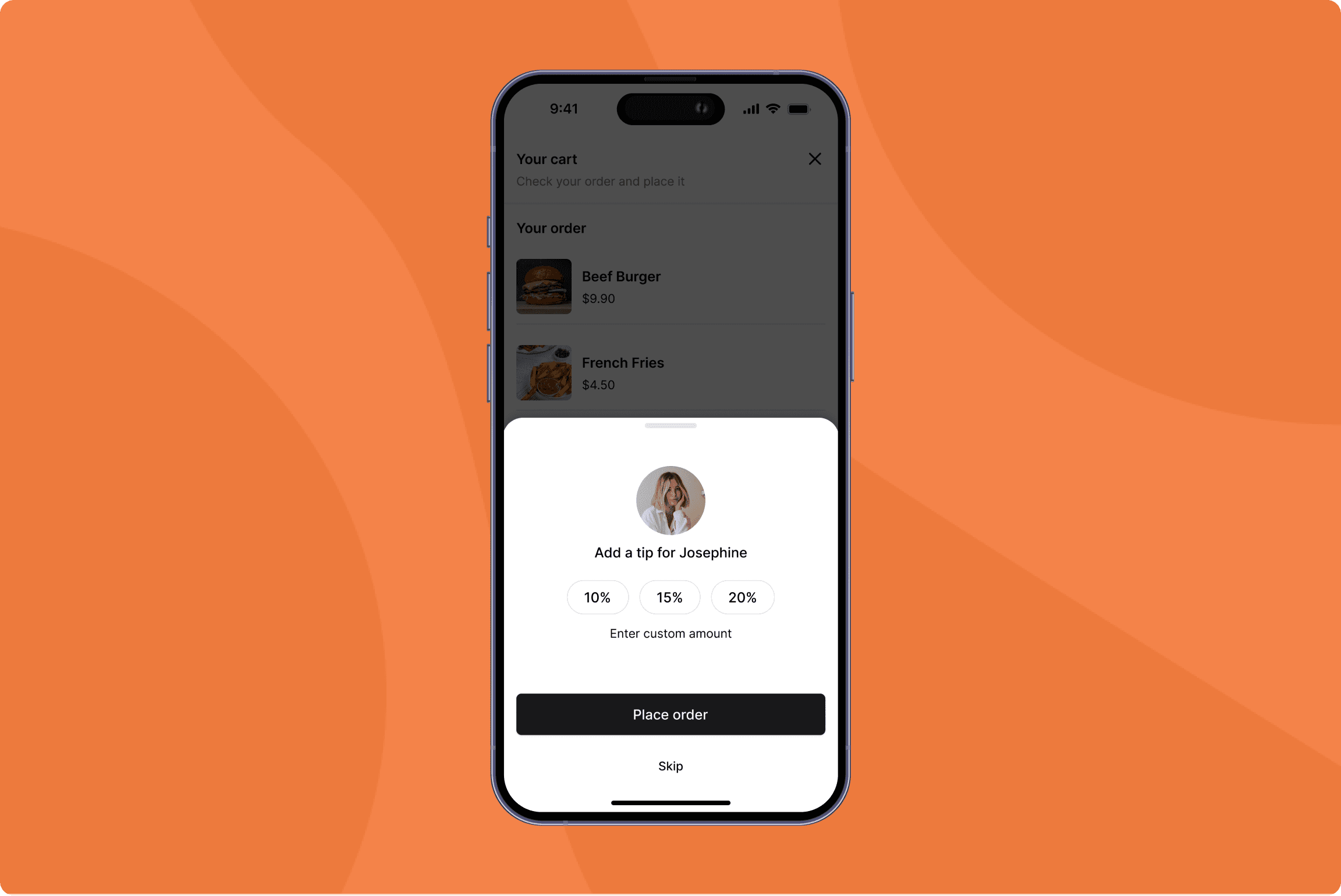
Soon, into our piloting phase, we already encountered an issue that we didn’t predict. With customers paying through their phone, the wait staff was getting less tips. While initially, the feedback from them was positive, as they were spending less time walking back and forth, this issues soured them on it.
Our goal was never to replace waiters, only to assist them and the other staff. So our top priority became solving this issue. We took inspiration from tipping screens in other service apps, and quickly rolled out an update for tipping. After release, we started getting less negative feedback regarding tips. And although it’s too early to say, there’s some indications that tips have increased even beyond what they were originally.
Soon, into our piloting phase, we already encountered an issue that we didn’t predict. With customers paying through their phone, the wait staff was getting less tips. While initially, the feedback from them was positive, as they were spending less time walking back and forth, this issues soured them on it.
Our goal was never to replace waiters, only to assist them and the other staff. So our top priority became solving this issue. We took inspiration from tipping screens in other service apps, and quickly rolled out an update for tipping. After release, we started getting less negative feedback regarding tips. And although it’s too early to say, there’s some indications that tips have increased even beyond what they were originally.
Problem #2
Problem #2
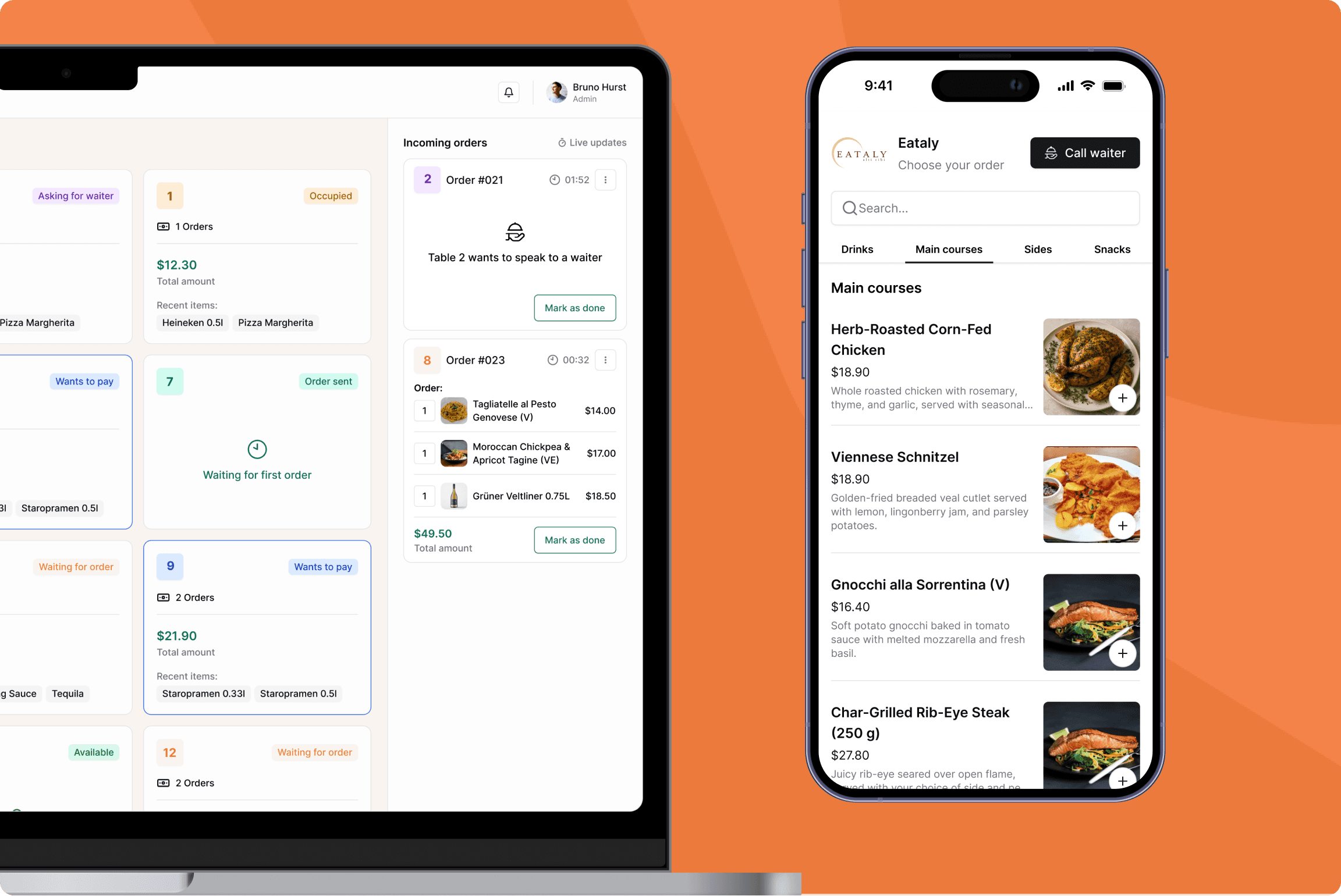
There are many cases in which someone wants to speak to a waiter. There might be an issues with the order, they might have questions about some items, they might want to order something custom, they might be comfortable enough with technology to scan the QR code and read the menu, but not enough to pay through their phone, or they simply prefer ordering face to face.
In order to cover this gap in our product, we added a call waiter button to our customer facing menu, and introduced a new status for tables. Just like they see incoming orders, wait staff can now also see when a table simply wants to speak to them.
There are many cases in which someone wants to speak to a waiter. There might be an issues with the order, they might have questions about some items, they might want to order something custom, they might be comfortable enough with technology to scan the QR code and read the menu, but not enough to pay through their phone, or they simply prefer ordering face to face.
In order to cover this gap in our product, we added a call waiter button to our customer facing menu, and introduced a new status for tables. Just like they see incoming orders, wait staff can now also see when a table simply wants to speak to them.
Problem #3
Problem #3
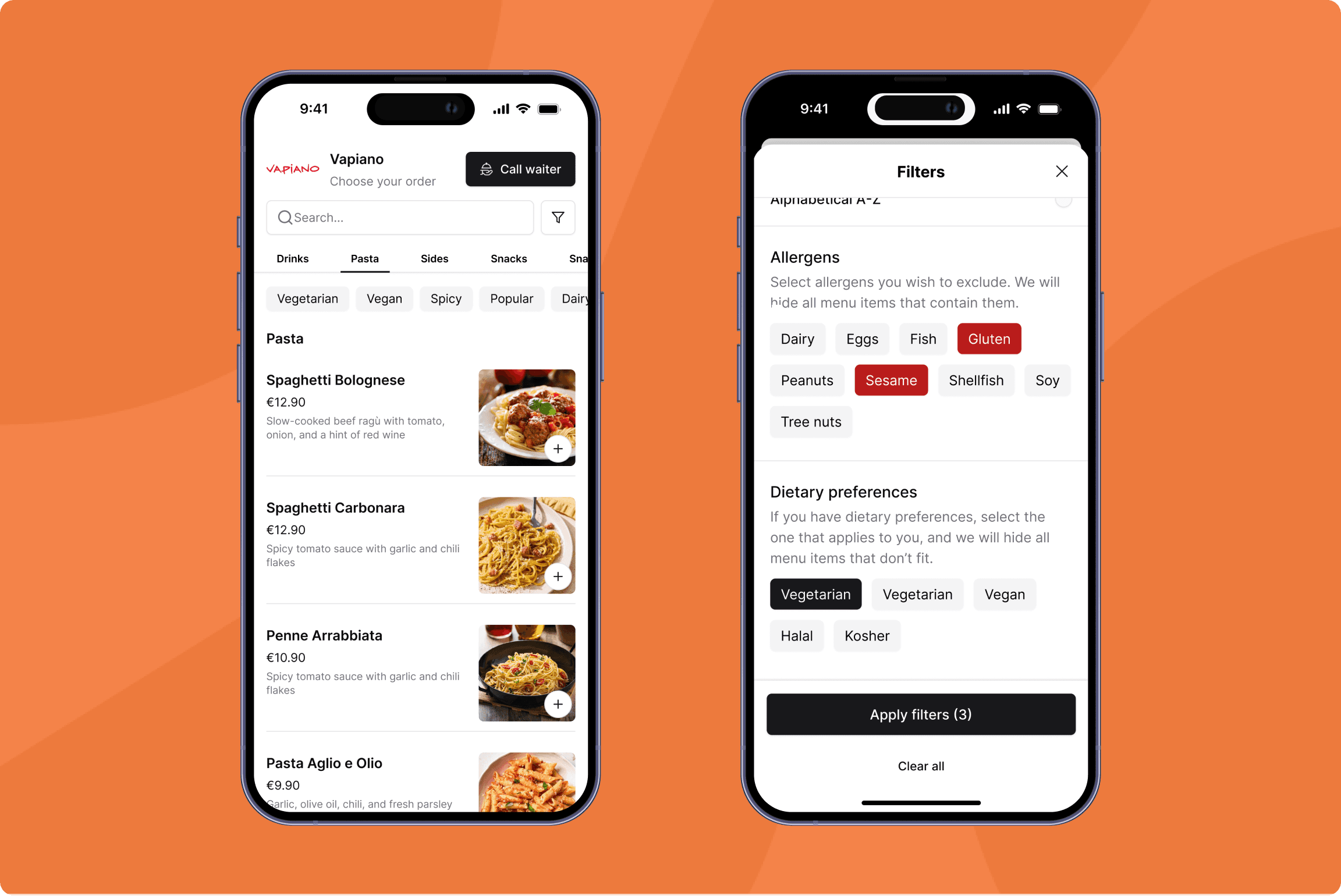
We had always planned to release filters within one of our early updates. However filters, and in particular allergens and dietary preferences, became a frequently requested addition. In restaurants, questions about ingredients were the most common ones that waiters encountered.
We pushed filters ahead in the timeline, and made sure to place allergens and dietary preferences close to the top. On top of just introducing regular filters, we also added chips, so that users can filter the menu even easier.
We had always planned to release filters within one of our early updates. However filters, and in particular allergens and dietary preferences, became a frequently requested addition. In restaurants, questions about ingredients were the most common ones that waiters encountered.
We pushed filters ahead in the timeline, and made sure to place allergens and dietary preferences close to the top. On top of just introducing regular filters, we also added chips, so that users can filter the menu even easier.
Current status
Current status
Piloting is still ongoing, but we are preparing for a full release
The piloting phase has proved instrumental in improving our product at a rapid phase. Even when we thought that we had anticipated most issues, we quickly learned that we had barely scratched the surface. But even with the occasional issues, our pilots are happy with Hermes QR and look forward to new features all the time.
Outside of the product itself, there is still the matter of marketing, client outreach, administrative tasks, and more. Nevertheless, we are planning to launch Hermes QR within Q2 of 2026.